

Most Canadian homes offer pockets of medium light. It's not the direct sun of a south-facing window, but it's also not the deep shade of a windowless corner. This balanced environment is ideal for a huge variety of houseplants, allowing you to grow a diverse indoor jungle without needing specialized lighting. Understanding this "sweet spot" is the first step to choosing plants that will not just survive, but actively thrive in your space.
This guide provides a clear framework for identifying medium light in your home and selecting plants that are well-suited to it. We will cover how to assess your windows, what to look for in a plant's leaves, and how to adjust your care routine for the unique challenges of Canadian winters.
Defining medium light in your home
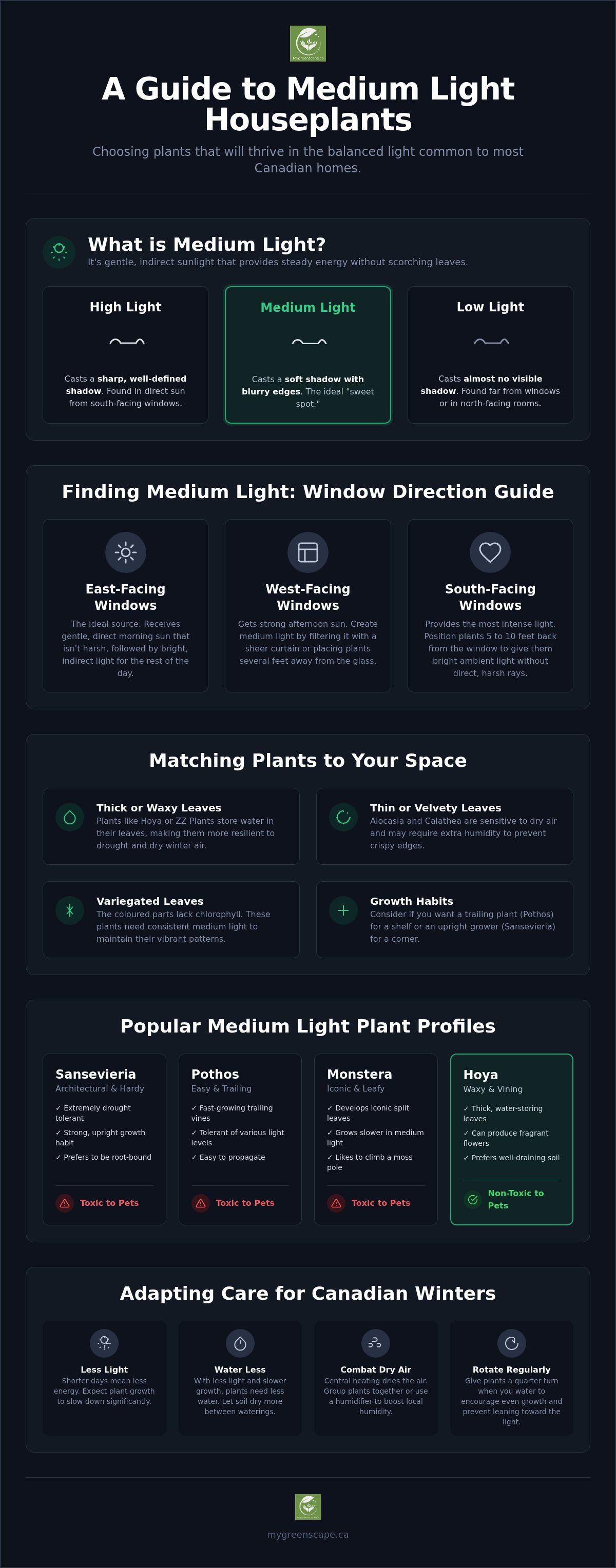
Medium light is best described as gentle, indirect sunlight that does not cast a sharp, well-defined shadow. It’s the ambient glow that fills a room, providing enough energy for photosynthesis without the risk of scorching delicate leaves. In most Canadian homes and apartments, this is the most common type of lighting available, making it a versatile starting point for any plant parent. The key is recognizing how light intensity changes based on your window's direction and your plant's distance from it.
Direct sun rays are intense and can burn foliage, while the soft, filtered light of a medium-light spot provides steady energy. Your goal is to find the locations in your home that receive this consistent but gentle illumination for several hours each day.
Identifying your window direction
The direction your windows face is the single most important factor in determining the quality and duration of light your plants will receive. Each direction has a distinct light profile that changes with the seasons.
- East-Facing Windows: These are often considered the perfect source for medium light plants. They receive several hours of soft, direct morning sun that is not intense enough to cause damage. As the day progresses, the light becomes bright but indirect, providing consistent energy.
- West-Facing Windows: These windows get strong, direct afternoon sun. While this can be too harsh for many medium light plants placed right on the sill, the light is perfect if filtered through a sheer curtain. You can also place plants several feet back from a west-facing window, where the intensity drops off significantly.
- South-Facing Windows: In Canada, south-facing windows provide the most intense, direct light throughout the day. To create a medium light pocket here, position your plants five to ten feet away from the glass. This allows them to benefit from the bright ambient light without being exposed to the harsh direct rays.
The shadow test for light intensity
If you're unsure about your window's direction or just want to confirm the light level in a specific spot, the shadow test is a simple and effective tool. You don’t need any special equipment, just your hand and a moment of observation during the brightest part of the day (usually around noon).
- Place your hand a few inches above the surface where you plan to put your plant.
- Observe the shadow your hand casts. If the shadow has soft, fuzzy, or blurry edges, you have found a medium light area. This indicates the light is bright but diffused.
- For comparison, a sharp, clearly defined shadow means the area receives high or direct light. If there is almost no shadow at all, the spot is considered low light.
Features to consider when choosing houseplants
Once you've identified the medium light spots in your home, you can start choosing plants. Beyond just aesthetics, considering a plant's physical characteristics will help you match it to your environment and lifestyle. Factors like leaf thickness, growth rate, and humidity needs are excellent indicators of how a plant will adapt to your indoor space, especially with the dry air produced by central heating.
If you have pets, it's also critical to check for toxicity. Many common houseplants can be harmful if ingested, so always confirm a plant's safety by checking a trusted database or browsing a dedicated Pet Friendly collection.
Leaf texture and environmental resilience
A plant's leaves can tell you a lot about its needs. Waxy or thick, succulent-like leaves, such as those on a Hoya or a ZZ Plant, are built to store water. This trait makes them more resilient to periods of drought and better equipped to handle the dry air common in Canadian homes during winter. They lose moisture more slowly through transpiration, meaning they won't wilt as quickly if you forget to water them.
Variegated plants, like the popular Philodendron Birkin, have leaves with patterns of different colours. These non-green sections lack chlorophyll, so the plant needs consistent, bright medium light to produce enough energy to maintain its vibrant patterns. In lower light, you may notice the variegation fading as the plant produces more green to compensate. On the other hand, plants with thin or velvety leaves, like the stunning Alocasia Frydek, are often native to very humid jungle understories. They tend to be more sensitive to dry air and may develop crispy brown edges without supplemental humidity.
Growth habits and space planning
Consider how a plant will grow over time and whether it fits the space you have planned for it. Trailing plants, like a Golden Pothos, are perfect for hanging baskets or shelves where their vines can cascade down. Upright growers, such as the architectural Sansevieria, create strong vertical lines and work well as floor plants or in tight corners.
Keep in mind that medium light provides less energy than bright, indirect light, which can affect a plant's growth rate. A fast-growing plant like a Monstera Deliciosa will grow more slowly and produce smaller leaves in medium light than it would in a brighter location. This can be an advantage if you want to keep a plant a manageable size. You may also notice your plants leaning or stretching toward their light source. To encourage even, upright growth, give them a quarter turn every time you water.
Comparing popular medium light houseplants
The medium light category includes some of the most visually interesting and resilient houseplants available. From bold, colourful foliage to plants with unique textures and patterns, there is a species to match any decor style. Comparing their specific features can help you decide which one is the right fit for your home and care routine.
For those who travel or have a busy schedule, the ZZ Plant is one of the most drought-tolerant houseplants you can buy, storing water in thick underground rhizomes that let it go weeks without attention. For adding a splash of vibrant colour, an Aglaonema is an excellent choice. Each plant brings a different aesthetic and has slightly different needs, even within the same light category.
Pro Tip: To understand how light intensity varies across different indoor environments, you can consult the detailed light charts at gardenerspath.com to ensure your space is suitable.
Foliage plants with vibrant colours
If you want to introduce colour without relying on flowers, several medium light plants offer stunning foliage. The Aglaonema Red Siam, for example, features deep green leaves heavily splashed with bright red and pink. It's a showstopper that maintains its colour well in indirect light. The Stromanthe Triostar is another favourite, with painterly strokes of cream, green, and pink on its leaves. This plant is also known for its nyctinastic movement, where the leaves fold up at night, adding a dynamic quality to your collection.
For a more subtle but equally beautiful option, the Scindapsus Silver Satin has heart-shaped, deep green leaves with a velvety texture and a pattern of silvery splashes. It’s a trailing plant that looks wonderful on a high shelf or in a hanging planter, and its unique sheen catches the light beautifully.
Note: Aglaonema Red Siam and Scindapsus Silver Satin are toxic to pets. If you have curious cats or dogs, browse our Pet Friendly collection or check the ASPCA's plant database before buying.
Modern textures and patterns
For a contemporary aesthetic, plants with strong patterns and textures are a great fit. The Philodendron Birkin is prized for its dark green leaves with crisp, white pinstripes. Each new leaf emerges with a slightly different pattern, creating a constantly evolving display. Another plant known for its intricate leaves is the Calathea Lancifolia, or Rattlesnake Plant. Its long, wavy-edged leaves have a striking pattern of dark green ovals set against a lighter green background, with rich purple undersides.
If you prefer a touch of dark, sophisticated elegance, the Alocasia Frydek is an exceptional choice. Its deep, velvet-green, arrow-shaped leaves are contrasted by brilliant white veins. This plant commands attention and adds a luxurious feel to any room, though it does appreciate higher humidity to keep its velvety leaves in pristine condition.
Note: Philodendron Birkin and Alocasia Frydek are toxic to pets. For homes with animals, consider pet-safe alternatives like Calathea, or check the Pet Friendly collection before buying.
Caring for houseplants during Canadian winters
Winter in Canada presents a unique set of challenges for indoor plants. As we turn on our central heating, the indoor humidity level plummets, creating a dry environment that is tough on many tropical houseplants. At the same time, the days become shorter and the sun sits lower in the sky, drastically reducing the amount of available light. Adjusting your care routine is essential to help your plants navigate this dormant season and emerge healthy in the spring.
The biggest mistake is maintaining a summer watering schedule. With less light and slower growth, plants use water much more slowly. Overwatering in winter is a common cause of root rot. It's also important to keep leaves clean, as a layer of dust can block what little light is available.
Managing indoor humidity
Forced-air heating systems are efficient at warming our homes but are notorious for drying out the air. Most tropical plants prefer humidity levels between 40-60%, while the average heated Canadian home can drop to 10-20%. To combat this, you can:
- Use a Humidifier: Placing a small humidifier near your plants is the most effective way to raise the ambient moisture level.
- Create a Pebble Tray: Fill a shallow tray with pebbles and water, then place your plant pot on top. Ensure the bottom of the pot sits on the pebbles, not in the water. As the water evaporates, it will create a small pocket of humidity around the plant.
- Group Plants Together: Plants naturally release moisture through transpiration. By grouping them close together, you can create a humid microclimate that benefits the entire collection.
Finally, be mindful of where your plants are placed. Avoid positioning them directly over or near heating vents, as the constant blasts of hot, dry air can quickly desiccate their leaves.
Adjusting water and light
As plants enter a period of dormancy or slow growth in the winter, their need for water decreases significantly. Before watering, always check the soil moisture. The finger test is reliable: insert your finger about two inches into the soil. If it feels dry at that depth, it's time to water. If it's still damp, wait a few more days and check again.
To maximize light absorption during the shorter days, move your plants closer to their window. A spot that was perfect in the summer might not provide enough light in the winter. You should also pause your fertilizing routine. Plants don't need the extra nutrients when they aren't actively growing, and fertilizing during dormancy can lead to a buildup of salts in the soil that can burn the roots. Wait until you see the first signs of new growth in the spring before you start fertilizing again.
Selecting your medium light plant bundle
Choosing a curated plant bundle can be a great way to start or expand your indoor jungle with a cohesive look. It simplifies the selection process, pairing plants that share similar light and care requirements so you're not guessing what goes together. As a small business based in Richmond Hill, we take pride in sourcing healthy plants and providing the support you need to help them thrive.
We stand behind our plants with the 30 Day Happy Plant Guarantee. If your plant has any issues within the first 30 days, contact us with a photo and we'll work with you to find a solution. We also offer carbon neutral shipping on deliveries across Canada, so you can grow your collection sustainably. For local customers, plants can be picked up directly from our Richmond Hill store.
The Mygreenscape shipping guarantee
We know that shipping live plants can be a concern, so we've developed a careful packing process to ensure they arrive safely. Before leaving our shop in Richmond Hill, every plant is inspected for pests and overall health. We water it if needed and secure the soil to prevent spills during transit. The plant is then wrapped in protective paper and placed snugly in a box with cushioning material to minimize movement.
Our support doesn't end when the plant arrives. Our support doesn't end when the plant arrives. If you run into any issues, text us photos of your plants and our team will help you figure out what's going on and what to do next.
Next steps for your indoor jungle
Now that you know how to identify medium light and choose the right plants, you're ready to find the perfect match for your home. An east-facing window is a great place to start, offering the gentle morning light that so many foliage plants love. Browse our collection to see which textures and colours speak to you.
To set your new plants up for long-term success, consider picking up the right potting soil and fertilizer while you shop. Having the right supplies on hand makes ongoing care simple and rewarding. You can find everything you need in our Medium Light Plant Collection.
Frequently Asked Questions
How do I know if my room has medium light?
The easiest way is the shadow test. At midday, hold your hand up in the spot you want to place a plant. If the shadow it casts is soft and slightly blurry, you have medium light. A sharp, dark shadow indicates bright light, and a very faint or non-existent shadow means low light. Generally, a spot a few feet from an east or west-facing window, or further back from a south-facing window, will provide medium light.
Can medium light plants survive in a room with no windows?
No, medium light plants cannot survive long-term in a room without any natural light source. Photosynthesis requires light, and even the most tolerant low-light plants need some natural light to live. A windowless room would require a dedicated grow light to keep a medium light plant healthy.
Why are the leaves on my medium light plant turning yellow?
Yellowing leaves are most often a sign of overwatering. This is especially common in medium light conditions where plants use water more slowly. Before you water, check that the top two inches of soil are completely dry. Other potential causes include nutrient deficiency, pests, or natural aging where the plant sheds its oldest leaves.
How often should I water my houseplants during a Canadian winter?
There is no set schedule, as frequency depends on the plant, pot size, and your home's temperature and humidity. However, you will water much less often than in the summer. Instead of watering on a schedule, rely on checking the soil moisture. For most medium light plants, this might mean watering every 2-4 weeks in the winter, compared to every 1-2 weeks in the summer.
Are there medium light plants that are safe for cats and dogs?
Yes, absolutely. Several popular medium light plants are non-toxic to pets. The Calathea family, with its stunning patterned foliage, is a great pet-safe choice. Hoyas, known for their waxy leaves and beautiful blooms, are also safe for cats and dogs. Always double-check a plant's toxicity before bringing it into a home with pets.
What should I do if my plant arrives with shipping damage?
If your plant arrives with minor damage, like a bent or broken leaf, it's usually just cosmetic and the plant will recover quickly. You can prune the damaged leaf with clean scissors. If the damage is significant or you're concerned about the plant's health, contact us within 30 days as part of our Happy Plant Guarantee. Send us a photo, and we will help you with the next steps.

Article by
Imtiaz Cheval
Imtiaz is the founder of MyGreenScape, an online houseplant shop based in Richmond Hill, Ontario. He's spent years growing, propagating, and troubleshooting houseplants of every kind, from finicky Calatheas to easygoing Pothos. When he's not filling orders, he's testing new watering and light setups to see what actually works. He writes about plant care to help people keep their plants alive and thriving, not just looking good on a shelf. Got a plant problem? He's probably run into it already.


