Skip to product information
1 of 4

Croton Gold Dust

Croton Gold Dust

Regular price $12
Regular price Sale price $12
Sale Sold out
Shipping calculated at checkout.
Cleaner air for less — save 15% on the Air-Purifying BundleChoose 3 or more air-purifying plants
Size
🌱 Earn $5 credit per $50 spent
Applied automatically at checkout. Valid 90 days.
Read more

About This Plant

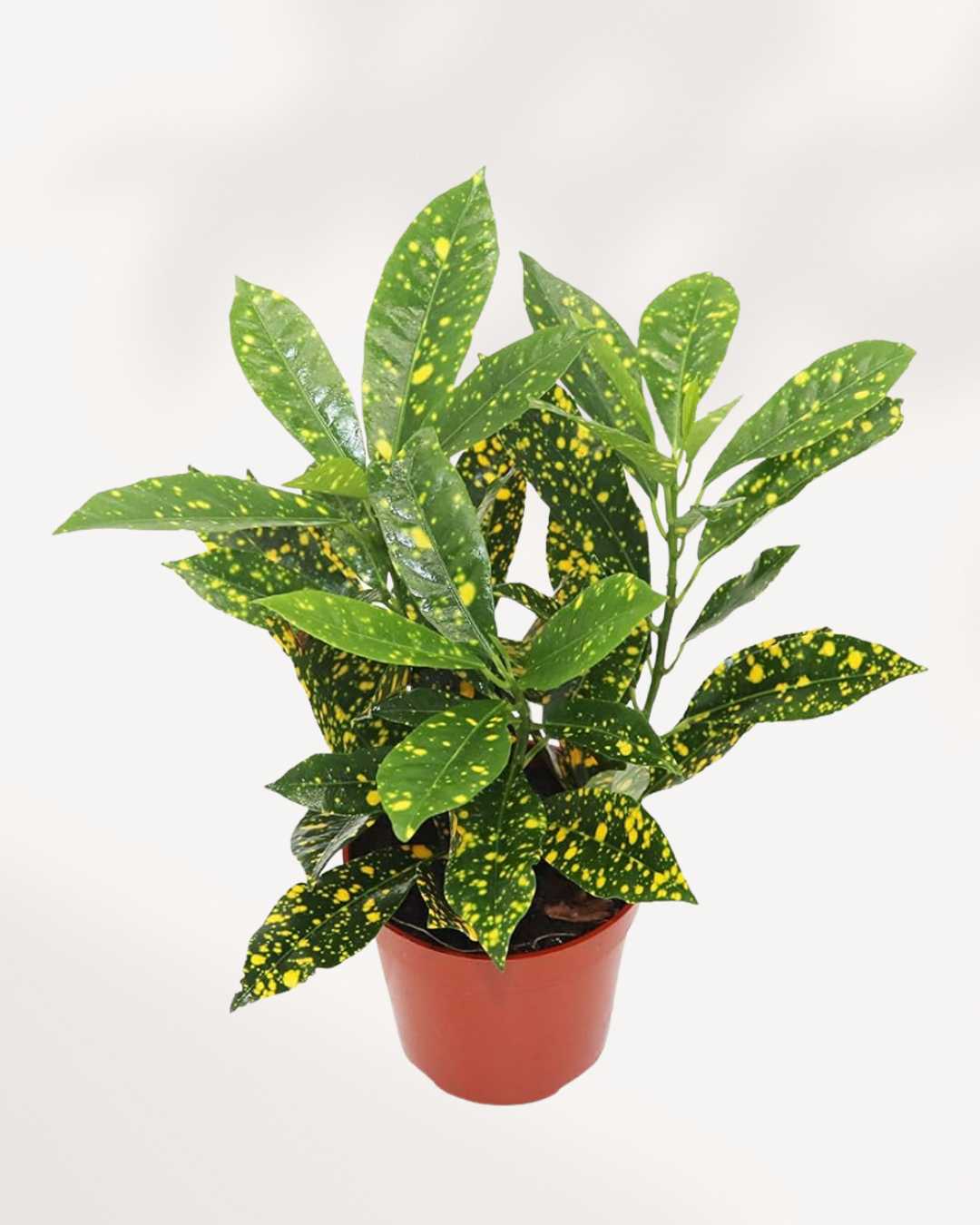
Croton Gold Dust (Codiaeum variegatum Gold Dust) is native to the tropical forests and open scrublands of Southeast Asia and the Pacific Islands. It is a compact Croton variety, typically reaching 45 to 75 cm tall indoors, and suits desks and medium shelves in bright Canadian rooms.

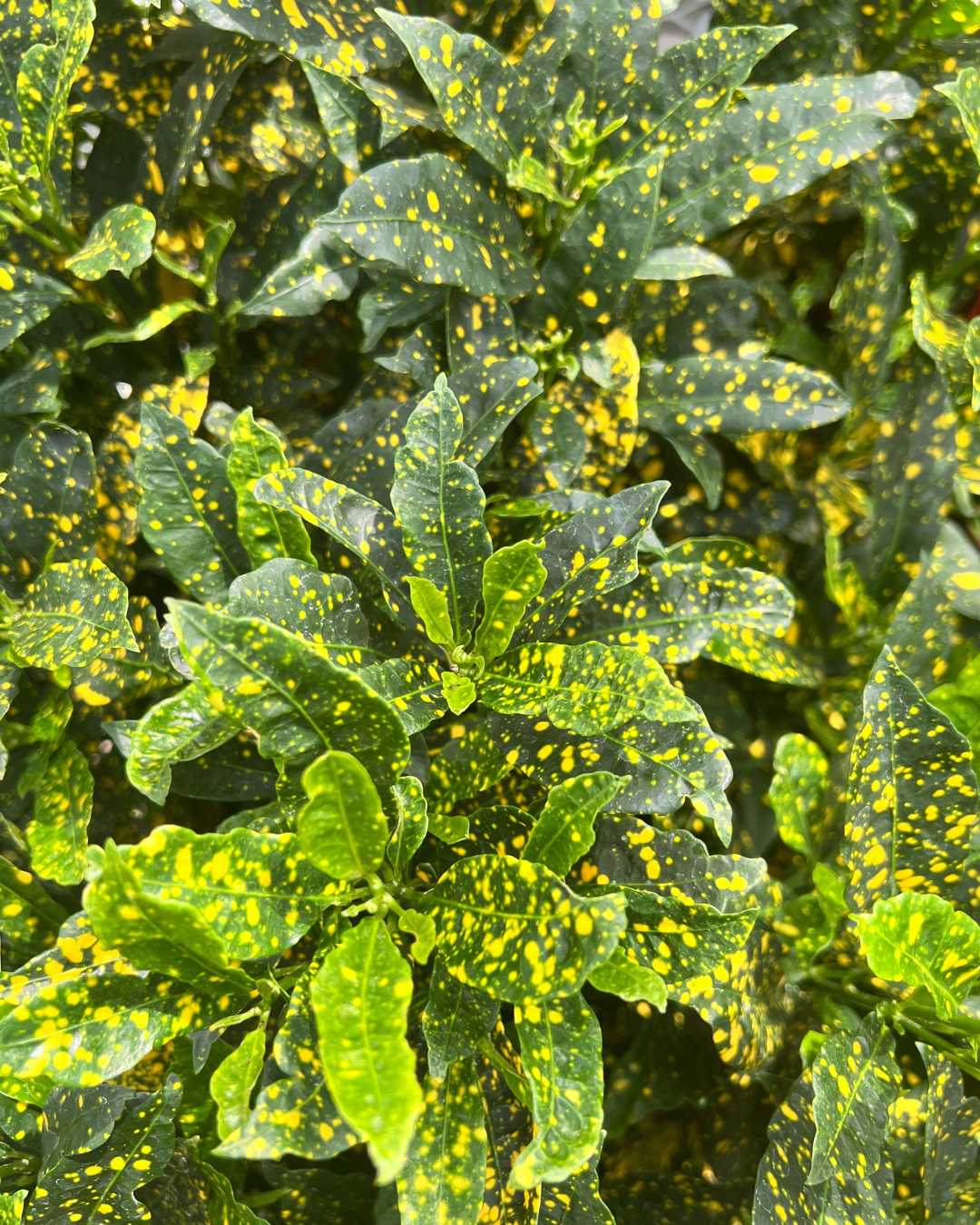
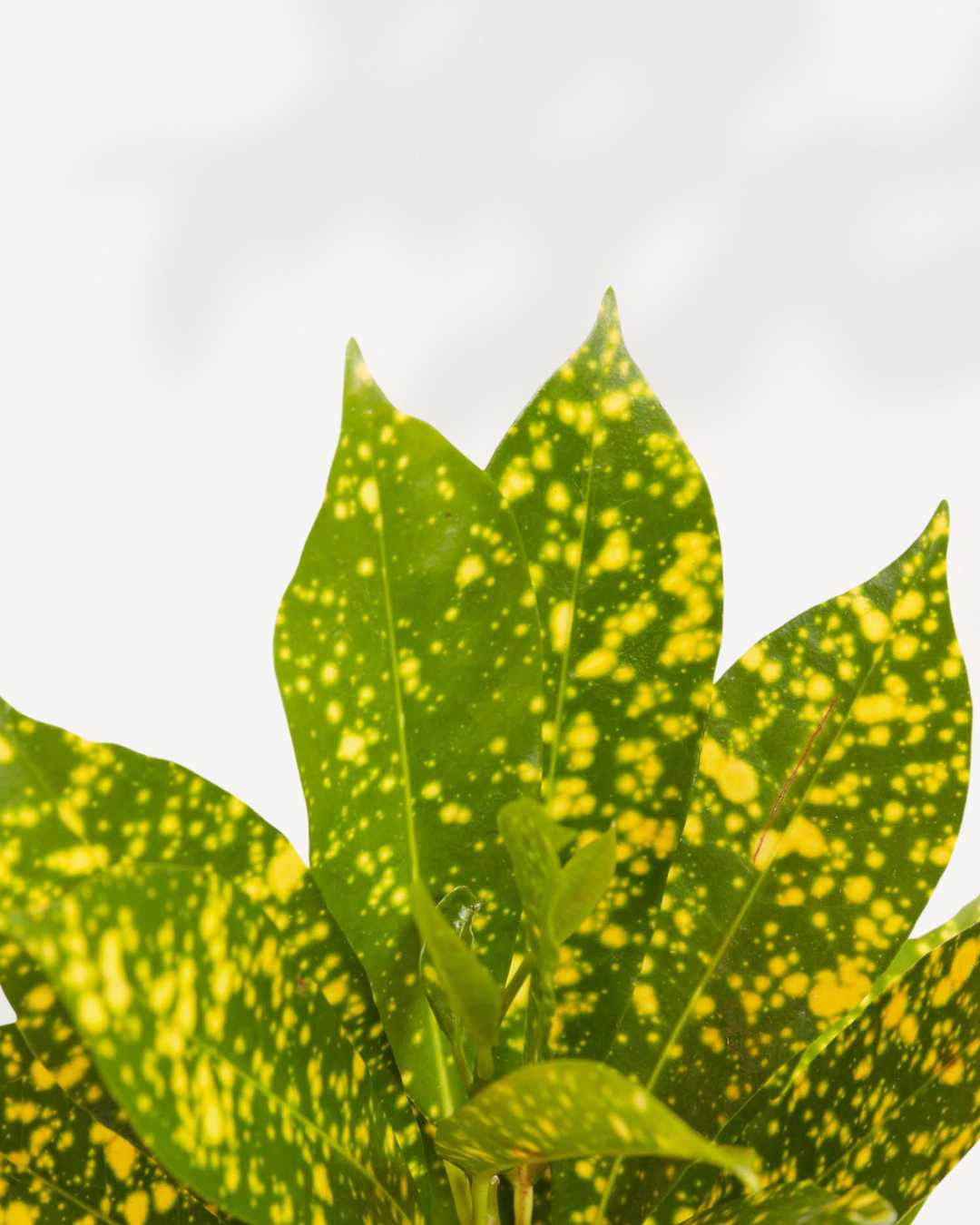
The gold spotting intensifies with more light and fades without it. The yellow-gold spots on the Gold Dust Croton are not fixed in intensity. In direct or very bright indirect light, the spots become dense and vivid, sometimes covering nearly the whole leaf surface. In lower light the spots become sparse and pale.

Keep it away from pets and children. The ASPCA confirms Codiaeum variegatum is toxic to cats, dogs, and horses. The latex sap is a skin irritant and ingestion causes vomiting and diarrhea. Wear gloves when pruning as the sap can irritate skin and eyes. Keep it out of reach of pets and small children.

Choose its spot and leave it there. Like all Crotons, the Gold Dust drops leaves when moved. Every relocation triggers leaf drop. Find the brightest available window in your home and place it there permanently. Some leaf drop is normal when the plant first arrives.

Winter Slowdown

Growth slows from November onward and the gold spotting may become less dense as Canadian light levels drop. Keep it in your sunniest south- or east-facing window. Maintain temperatures above 15 degrees C, keep it away from cold glass and heating vents, and do not move it. Reduce watering slightly as growth has slowed. No fertilizer until spring.

Toxicity

Toxic to cats, dogs, and horses, confirmed by the ASPCA (Codiaeum variegatum). The latex sap contains skin irritants and diterpene esters. Ingestion causes vomiting, diarrhea, and drooling. Sap contact with skin can cause irritation and dermatitis. Keep it out of reach of pets and small children. Wear gloves when pruning.

Pests

Spider mites are the main pest in dry Canadian homes from November onward, appearing as pale stippling on the leaf surfaces and fine webbing on the undersides. The dark green leaves make early stippling easier to spot than on lighter-leaved plants. Check both surfaces of each leaf when watering. Mealybugs can appear at the base of stems and in leaf joints.

Other Plants You Might Like

Not sure this is the right fit? Here are three other plants our Canadian customers love. All ship across Canada and thrive in Canadian homes.

Croton Banana. Long and striped.

For a Croton with a very different long, narrow strap-like leaf in yellow, green and orange, the Croton Banana has bold striping and the same bright-light requirement.

Croton Mammy. Twisted and dramatic.

For a Croton with large twisted, lobed leaves in deep red, orange and yellow, the Croton Mammy makes a much bolder statement and needs the same conditions.

Croton Sunshine. Broad and yellow.

For a Croton with broad, vibrant yellow-green leaves rather than spotted ones, the Croton Sunshine fills a bright spot in a Canadian room with warm, saturated colour.

Common Questions

How often should I water the Croton Gold Dust?

Water when the top inch of soil feels dry, roughly every seven to ten days in spring and summer and every ten to fourteen days in a Canadian winter. Never let it sit in standing water. Our indoor plant watering guide shows how to check correctly.

Why are the gold spots fading?

Fading gold spots almost always mean the plant is not getting enough direct or bright light. The spotting is directly tied to light intensity. Move it to a brighter south- or east-facing window. The spots will return within a few weeks in adequate light. Read our guide to light requirements for indoor plants for more.

Is the Croton Gold Dust toxic to cats and dogs?

Yes. The ASPCA confirms Codiaeum variegatum is toxic to cats, dogs, and horses. The sap causes vomiting, diarrhea, and skin irritation. Keep it out of reach of pets and small children and wear gloves when pruning.

Why is it dropping leaves?

Leaf drop is the Croton response to being moved, temperature changes below 15 degrees C, or very dry air from heating vents. The most common cause is relocation. Find the brightest permanent spot and leave it there. New leaves will grow once it has settled.

Will it survive a Canadian winter indoors?

Yes, if kept stable and in good light. Keep temperatures above 15 degrees C, in your brightest window, and do not move it. Read our tips on keeping plants alive in winter for more.

Good to Know

Sun: Direct to bright indirect

Needs bright light to keep the gold spotting vivid. A south- or east-facing window works best in a Canadian home. The more direct light it receives, the denser the gold spots. In lower light the spots fade to pale and the leaf reads as plain green.

Light: Bright

A south-facing window is ideal year-round. From October to February when Canadian daylight shortens, keep it in the brightest available spot. The gold spot density in winter is a direct indicator of whether the light level is adequate.

Water: When top inch of soil is dry

Water when the top inch feels dry. Every seven to ten days in spring and summer, every ten to fourteen days in a Canadian winter. Do not let it sit in standing water. Crotons tolerate some dryness better than soggy soil.

Humidity: Moderate to high

Prefers moderate to high humidity. The dry forced-air heating in Ontario and Quebec homes from November onward causes leaf drop and spider mites. A pebble tray or humidifier nearby helps through the Canadian heating season.

Pet Friendly: No

Toxic to cats, dogs, and horses, confirmed by the ASPCA (Codiaeum variegatum). The sap causes vomiting, diarrhea, and skin irritation. Keep out of reach of pets and small children. Wear gloves when pruning.

Pro Tip

With the Gold Dust Croton, the plant tells you exactly whether it is getting enough light. Dense, vivid gold spots covering most of the leaf surface means the light is right. Fading, sparse, pale spots on mostly green leaves means more light is needed.


What To Expect

Shipping and Delivery Details

Choose local GTA delivery, free Richmond Hill pickup, or shipping across Canada. Pick your delivery or pickup date at checkout, we'll have it ready and fresh for you. See full shipping and delivery details.

30-Day Happy Plant Guarantee

If your plant arrives damaged or isn't healthy, contact us within 30 days with a photo. We'll sort it out with a replacement, refund, or store credit whichever works best for you. View our complete guarantee policy

Frequently Asked Questions

Certainly! If you're pondering about ordering plants online, you're not alone. We've compiled the most frequently asked questions. Check out our FAQ section here for quick answers! Happy planting!

Plant and Pot Size Guide

4" Pot (Small): plant is approx. 6-10 inches tall. 6" Pot (Medium): approx. 12-18 inches tall. All plants come in a standard nursery pot. Decorative pots are sold separately.

Winter Shipping Protection

Between November and March we add extra insulated packaging and heat packs to protect your plant from cold temperatures during transit. You can add winter shipping protection at checkout.

Returns Policy

If a plant arrives with significant damage, pests, or disease, we offer a full replacement or refund.Our guarantee covers the viability and health of your plant for 30 days.
View full details

Plant care essentials

Everything you need to keep this plant thriving.

Hear From Happy Plant Parents.

Who have brought Mygreenscape plants into their homes.