


Couldn't load pickup availability
Applied automatically at checkout. Valid 90 days.
Read more
About This Plant
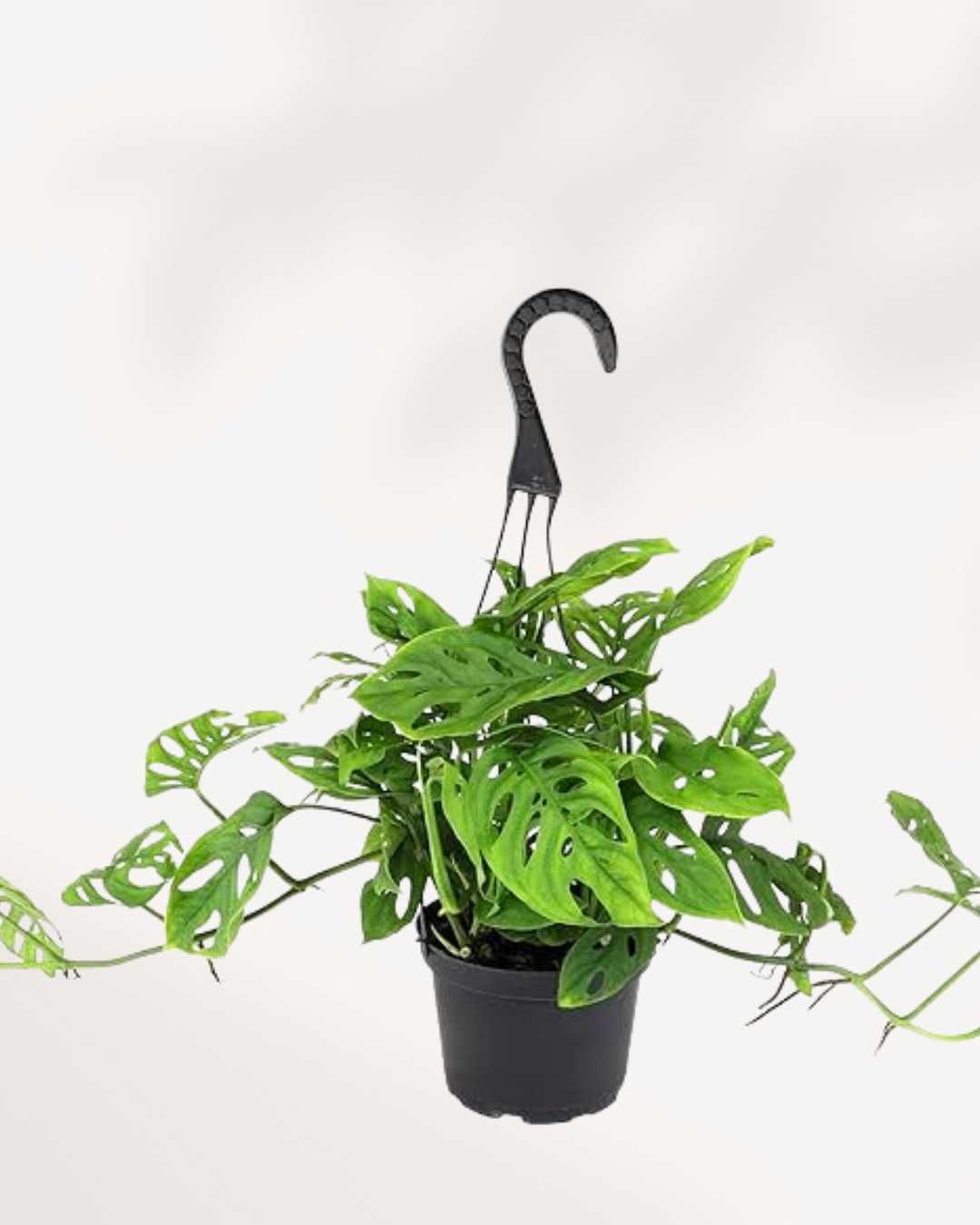
Monstera adansonii is native to the rainforests of Central and South America, where it climbs trees toward the forest canopy. Despite the name on this listing, it is a Monstera, not a Philodendron. Toxic to cats, dogs, and children according to ASPCA. It grows quickly indoors and is beginner friendly.
Other Plants You Might Like
Monstera Deliciosa
Pothos Jade
Philodendron Silver Sword
Common Questions
Why does my Monstera Adansonii have fewer holes in the leaves?
Smaller or fewer holes in the leaves usually means the plant needs more light or is not yet mature enough. Fenestrations develop as the plant grows, and in lower light the leaves stay smaller and rounder with less defined holes. Move the plant to a brighter spot with indirect light. As it continues to grow, new leaves should develop more pronounced holes. A moss pole also encourages larger, more fenestrated leaves as the plant climbs.
How often should I water Monstera Adansonii?
Water thoroughly when the top one to two inches of soil have dried out, roughly once a week in spring and summer. In winter, let the soil dry a bit further and reduce watering to every 10 to 14 days. Let excess water drain completely after each watering. Brown leaf tips usually indicate dry air or inconsistent watering. Yellowing leaves with wet soil usually means overwatering. See how to take care of the Monstera plant for a full care breakdown.
Does Monstera Adansonii need a moss pole?
It does not need one to survive or look good. Grown without support it trails or hangs and creates a full, cascading look in a hanging basket or from a shelf. With a moss pole it climbs upward and produces larger, more fenestrated leaves. Both approaches work well. The choice depends on the look you want and the space available. For a hanging basket, leave it to trail. For a taller, more dramatic plant, provide a pole and train the stems upward.
Is Monstera Adansonii safe for cats and dogs?
No, it is toxic to cats and dogs. The plant contains insoluble calcium oxalate crystals in its leaves and stems that cause immediate oral irritation, drooling, and difficulty swallowing if chewed or ingested. Keep the plant somewhere pets cannot access. If a pet ingests any part of this plant, contact a veterinarian immediately.
Why is this plant listed as a Philodendron?
Monstera adansonii and Philodendron are both members of the Araceae family and are frequently confused or grouped together at nurseries and in common usage. The two are related but distinct genera. The holes in the leaves are a Monstera trait, not found in true Philodendrons. The name on this listing reflects how it is commonly sold. If you want to understand the differences, the Monstera vs Philodendron guide covers what sets them apart.
How to Take Care of Monstera Adansonii
Good to Know
Soil: Chunky, well-draining mix with perlite and orchid bark
Soil: Chunky, well-draining mix with perlite and orchid bark
Light: Bright indirect light; keeps fenestrations developing and growth active
Light: Bright indirect light; keeps fenestrations developing and growth active
Water: When the top 1 to 2 inches of soil are dry; about weekly in the growing season
Water: When the top 1 to 2 inches of soil are dry; about weekly in the growing season
Humidity: Above 50% preferred; dry air causes brown leaf edges
Humidity: Above 50% preferred; dry air causes brown leaf edges
Toxicity: Toxic to cats, dogs, and children; keep completely out of reach
Toxicity: Toxic to cats, dogs, and children; keep completely out of reach
Pro Tip
Pro Tip
What To Expect
Shipping and Delivery Details
Shipping and Delivery Details
Choose local GTA delivery, free Richmond Hill pickup, or shipping across Canada. Pick your delivery or pickup date at checkout, we'll have it ready and fresh for you. See full shipping and delivery details.
30-Day Happy Plant Guarantee
30-Day Happy Plant Guarantee
If your plant arrives damaged or isn't healthy, contact us within 30 days with a photo. We'll send a replacement or a full refund, and we cover return shipping.
View our complete guarantee policy
Frequently Asked Questions
Frequently Asked Questions
Certainly! If you're pondering about ordering plants online, you're not alone. We've compiled the most frequently asked questions. Check out our FAQ section here for quick answers! Happy planting!
Plant and Pot Size Guide
Plant and Pot Size Guide
4" Pot (Small): plant is approx. 6-10 inches tall. 6" Pot (Medium): approx. 12-18 inches tall. All plants come in a standard nursery pot. Decorative pots are sold separately.
Winter Shipping Protection
Winter Shipping Protection
Between November and March, you can add Winter Shipping Protection at checkout. It adds insulated packaging and heat packs to protect your plant from the cold in transit. Cold damage is only covered if it's added to your order.
You can add winter shipping protection at checkout.
Returns Policy
Returns Policy
If your plant arrives damaged, has pests, or starts to decline within 30 days, we'll send a replacement or a full refund, and we cover return shipping.
Change of mind, repotted or trimmed plants, and cold damage without Winter Shipping Protection aren't covered. See our full Return Policy


Plant care essentials
Everything you need to keep this plant thriving.


Hear From Happy Plant Parents.
Who have brought Mygreenscape plants into their homes.


