


Couldn't load pickup availability
Applied automatically at checkout. Valid 90 days.
Read more
About This Plant
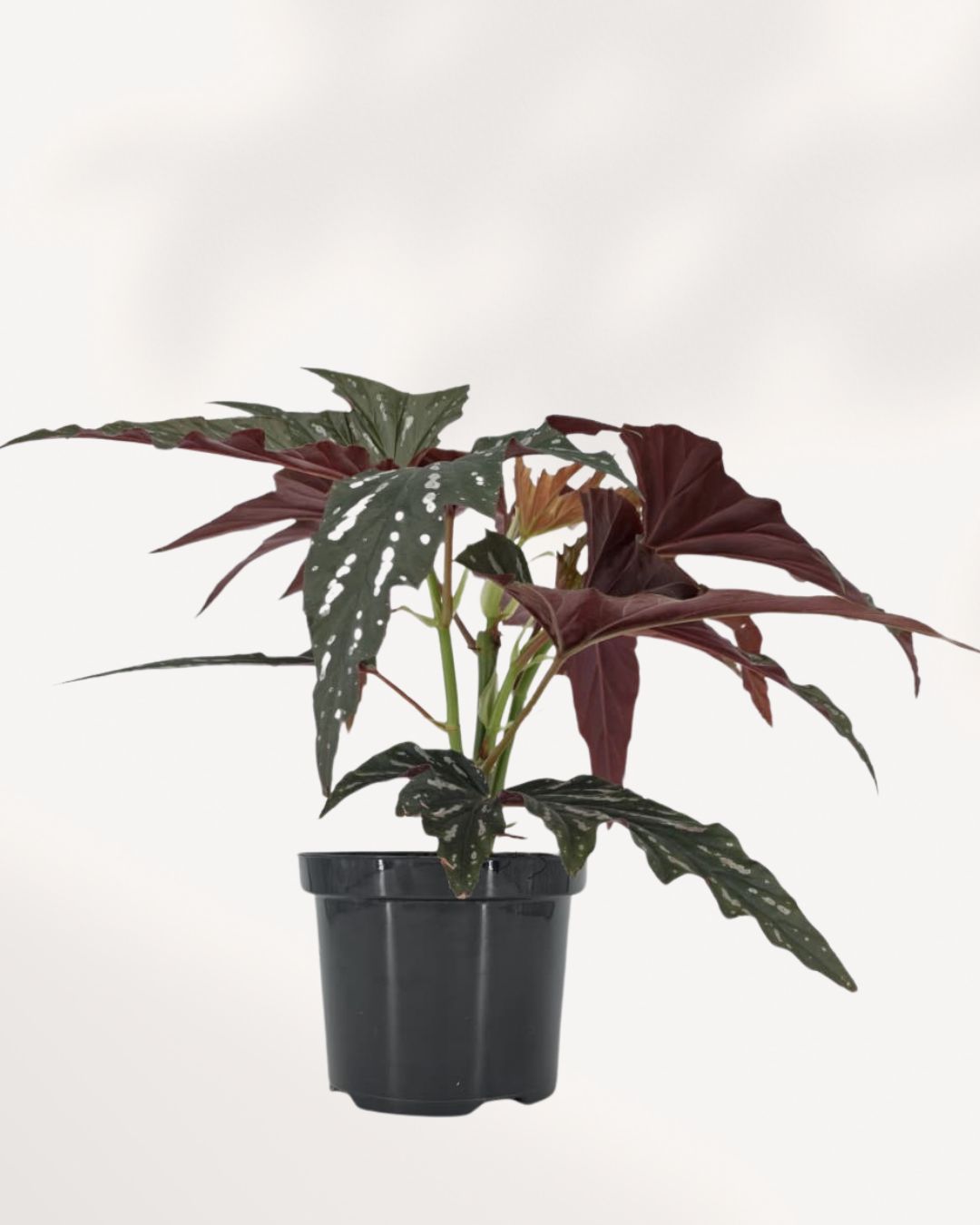
Angel Wing Begonia is a hybrid of cane-stemmed begonias native to tropical South America. It grows on upright, bamboo-like stems with large, asymmetric wing-shaped leaves in deep green covered in silver or white spots, with rich burgundy or red undersides.
Other Plants You Might Like
Begonia Maculata. Same family, same spots.
Strawberry Begonia. Trailing and textured.
Alternanthera Party Time. Vivid and compact.
Common Questions
How often should I water the Angel Wing Begonia?
Water when the top half of the soil feels dry. In spring and summer that is roughly once a week. In a Canadian winter, cut back to every ten to fourteen days as growth slows. Never leave it sitting in water. Our indoor plant watering guide shows exactly how to check moisture before watering.
What light does it need to flower indoors?
Bright indirect light is essential for regular blooming. An east-facing window is ideal, giving gentle morning light without harsh afternoon sun. The more bright indirect light it gets, the more reliably it flowers. Read our guide to light requirements for indoor plants to find the right spot.
Is the Angel Wing Begonia toxic to cats and dogs?
Yes. The ASPCA confirms Begonia spp. is toxic to cats, dogs, and horses. The plant contains soluble calcium oxalates, most concentrated in the roots, which cause vomiting, salivation, and drooling if ingested. Keep it on a high shelf that pets and small children cannot reach.
Why are the leaves getting crispy or brown at the edges?
Crispy edges almost always mean dry air or direct sun. The forced-air heating in Ontario and Quebec homes dries the air significantly in winter. Move the plant away from heating vents, and consider placing it on a pebble tray to add humidity. Also avoid letting direct afternoon sun hit the leaves.
Will it survive a Canadian winter indoors?
Yes. Keep it above 18°C and away from cold glass and heating vents. Growth slows and flowering stops in winter but the plant stays healthy. Reduce watering and stop fertilizing until spring. Read our tips on keeping plants alive in winter for more.
How to Take Care of Angel Wing Begonia
Good to Know
Sun: Indirect
Sun: Indirect
Light: Bright indirect
Light: Bright indirect
Water: When top half of soil is dry
Water: When top half of soil is dry
Humidity: Prefers moderate to high
Humidity: Prefers moderate to high
Pet Friendly: No
Pet Friendly: No
Pro Tip
Pro Tip
What To Expect
Shipping and Delivery Details
Shipping and Delivery Details
Choose local GTA delivery, free Richmond Hill pickup, or shipping across Canada. Pick your delivery or pickup date at checkout, we'll have it ready and fresh for you. See full shipping and delivery details.
30-Day Happy Plant Guarantee
30-Day Happy Plant Guarantee
If your plant arrives damaged or isn't healthy, contact us within 30 days with a photo. We'll send a replacement or a full refund, and we cover return shipping.
View our complete guarantee policy
Frequently Asked Questions
Frequently Asked Questions
Certainly! If you're pondering about ordering plants online, you're not alone. We've compiled the most frequently asked questions. Check out our FAQ section here for quick answers! Happy planting!
Plant and Pot Size Guide
Plant and Pot Size Guide
4" Pot (Small): plant is approx. 6-10 inches tall. 6" Pot (Medium): approx. 12-18 inches tall. All plants come in a standard nursery pot. Decorative pots are sold separately.
Winter Shipping Protection
Winter Shipping Protection
Between November and March, you can add Winter Shipping Protection at checkout. It adds insulated packaging and heat packs to protect your plant from the cold in transit. Cold damage is only covered if it's added to your order.
You can add winter shipping protection at checkout.
Returns Policy
Returns Policy
If your plant arrives damaged, has pests, or starts to decline within 30 days, we'll send a replacement or a full refund, and we cover return shipping.
Change of mind, repotted or trimmed plants, and cold damage without Winter Shipping Protection aren't covered. See our full Return Policy


Plant care essentials
Everything you need to keep this plant thriving.


Hear From Happy Plant Parents.
Who have brought Mygreenscape plants into their homes.


