


Couldn't load pickup availability
Applied automatically at checkout. Valid 90 days.
Read more
About This Plant
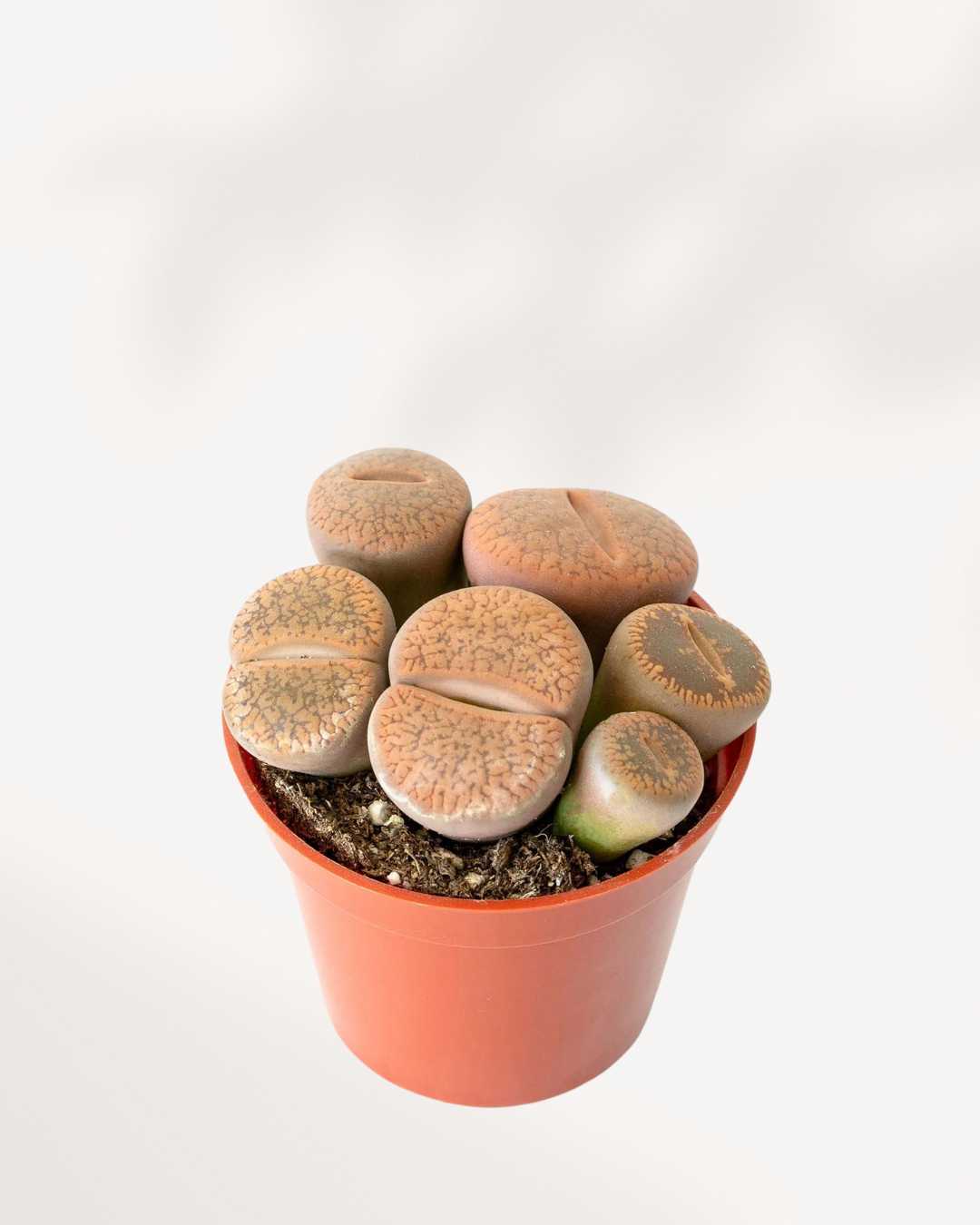
Lithops (Living Stones) are succulent plants native to the arid regions of South Africa and Namibia. Each plant consists of a pair of thick, fleshy leaves fused together at the base into a pebble-like body with a small gap or fissure at the top.
Other Plants You Might Like
Haworthia Succulent. Small, fascinating, easy.
Jade Plant. Long-lived and structural.
Aloe Vera. Practical and drought-tolerant.
Common Questions
How do I know when to water Lithops?
The watering calendar for Lithops is almost the opposite of every other houseplant. Water only during the active growing period, roughly from late spring through summer, and only when the leaf bodies show very slight wrinkling. From autumn through the leaf-splitting period and through the winter rest, provide no water at all. The plant lives entirely off the moisture stored in its thick leaves during this period. Watering during the wrong phase is the primary cause of Lithops dying in Canadian homes. Our indoor plant watering guide covers general soil moisture checking, but for Lithops the timing cycle matters more than any soil test.
Why is my Lithops splitting open in the middle?
A split down the middle of the two leaf bodies is the annual cycle of renewal, not a sign of damage. The old pair of leaves is drying and a new pair is forming inside, pushing out through the central fissure. This is normal and expected once a year. During this period, do not water at all. The plant draws all the moisture it needs from the old leaves to fuel the new growth. A flower may also emerge from the fissure during this period.
Are Living Stone Lithops toxic to cats and dogs?
Lithops are not listed in the ASPCA toxic or non-toxic plant database. Toxicity to cats and dogs cannot be confirmed from ASPCA data. Keep them out of reach of pets and small children as a precaution.
What happens if I water Lithops during the rest period?
Watering during the rest period causes the leaf bodies to absorb excess water they cannot process. The bodies swell, lose their pebble shape, split apart incorrectly, and the plant rots from the inside. This is the most common cause of Lithops death in Canadian homes. The rest period runs from when the new leaves begin emerging in autumn through to late spring, roughly October to May in a Canadian home. During this entire period, provide no water at all.
Will it flower indoors in a Canadian home?
Yes, with the right conditions. Lithops produce a daisy-like yellow or white flower from the central fissure, usually in autumn. To flower, the plant needs a south-facing window with several hours of direct or very bright light daily through the growing season, the correct no-water rest period, and to be an established plant rather than a very young specimen. Flowering is most consistent when the plant is in its brightest possible position from spring through autumn. Read our guide to light requirements for indoor plants to assess your window.
How to Take Care of Living Stone Lithops
Good to Know
Sun: Direct to very bright
Sun: Direct to very bright
Light: Direct to very bright
Light: Direct to very bright
Water: Almost never
Water: Almost never
Humidity: Very low
Humidity: Very low
Pet Friendly: Not confirmed, keep out of reach
Pet Friendly: Not confirmed, keep out of reach
Pro Tip
Pro Tip
What To Expect
Shipping and Delivery Details
Shipping and Delivery Details
Choose local GTA delivery, free Richmond Hill pickup, or shipping across Canada. Pick your delivery or pickup date at checkout, we'll have it ready and fresh for you. See full shipping and delivery details.
30-Day Happy Plant Guarantee
30-Day Happy Plant Guarantee
If your plant arrives damaged or isn't healthy, contact us within 30 days with a photo. We'll send a replacement or a full refund, and we cover return shipping.
View our complete guarantee policy
Frequently Asked Questions
Frequently Asked Questions
Certainly! If you're pondering about ordering plants online, you're not alone. We've compiled the most frequently asked questions. Check out our FAQ section here for quick answers! Happy planting!
Plant and Pot Size Guide
Plant and Pot Size Guide
4" Pot (Small): plant is approx. 6-10 inches tall. 6" Pot (Medium): approx. 12-18 inches tall. All plants come in a standard nursery pot. Decorative pots are sold separately.
Winter Shipping Protection
Winter Shipping Protection
Between November and March, you can add Winter Shipping Protection at checkout. It adds insulated packaging and heat packs to protect your plant from the cold in transit. Cold damage is only covered if it's added to your order.
You can add winter shipping protection at checkout.
Returns Policy
Returns Policy
If your plant arrives damaged, has pests, or starts to decline within 30 days, we'll send a replacement or a full refund, and we cover return shipping.
Change of mind, repotted or trimmed plants, and cold damage without Winter Shipping Protection aren't covered. See our full Return Policy

Plant care essentials
Everything you need to keep this plant thriving.


Hear From Happy Plant Parents.
Who have brought Mygreenscape plants into their homes.

