


Couldn't load pickup availability
Applied automatically at checkout. Valid 90 days.
Read more
About This Plant
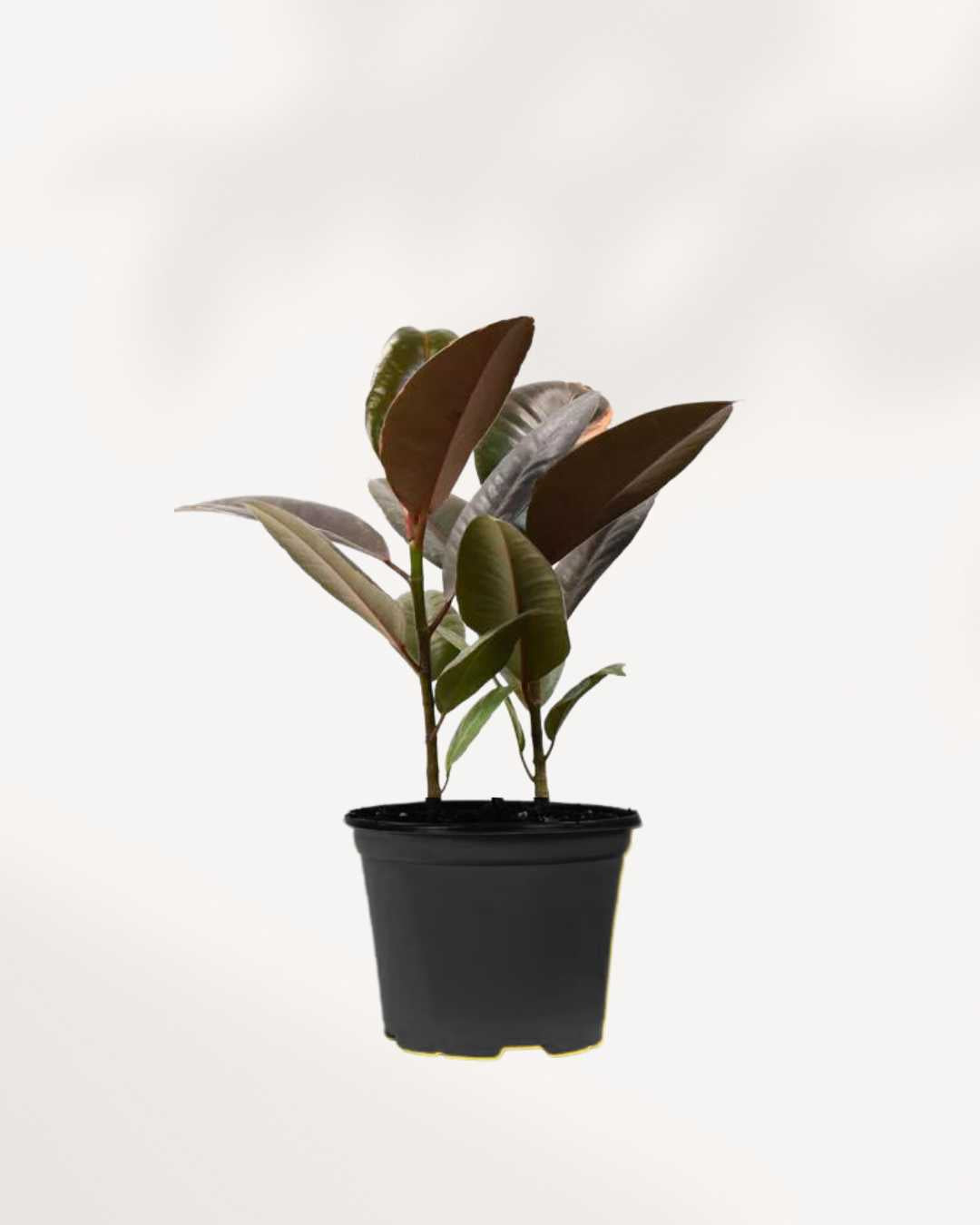
Ruby Red Rubber Plant (Ficus elastica variegated) is native to South and Southeast Asia. It is toxic to cats and dogs according to ASPCA. Indoors it grows as an upright tree with large, glossy leaves carrying a mix of green, cream, and pink; proportions vary leaf to leaf and new leaves emerge from a distinctive red sheath.
Winter Slowdown: It rests, it does not quit.
Other Plants You Might Like
Rubber Tree
Tineke Rubber Plant
Sophia Rubber Plant
Common Questions
What makes the Ruby Red Rubber Plant different from other rubber plants?
The Ruby Red is a variegated Ficus elastica cultivar with green leaves marked by pink and cream tones across the surface, along with a distinctive red new-growth sheath at the growing tip. This separates it from the solid dark-leafed Burgundy, the cream-and-green Tineke, and other rubber plant cultivars. The pink colouring and the warm, mixed palette give it a softer and more colourful character compared to the bold, dark-green or dark-burgundy solid varieties.
Why is my Ruby Red Rubber Plant losing its pink colouring?
The pink portions of the leaves need adequate light to develop and remain vivid. In lower light the plant produces more chlorophyll, which shifts new growth toward predominantly green leaves with little visible pink or cream. Move the plant to a brighter spot with indirect light and new leaves should come in with more visible pink colouring. Avoid direct midday sun, which can bleach or burn the leaves. Bright indirect light near a window is the best way to maintain the multi-colour pattern.
How often should I water a Ruby Red Rubber Plant?
Water when the top two to three inches of soil are dry, roughly every one to two weeks during the growing season. In winter reduce frequency to every two to three weeks. Ficus elastica handles underwatering better than overwatering. Consistently wet soil causes root rot and leaf drop. See the indoor plant watering guide for seasonal watering guidance.
Why is my Ruby Red Rubber Plant dropping leaves?
Leaf drop in Ficus elastica is almost always caused by one of three things: overwatering, moving the plant, or exposure to cold drafts or sudden temperature changes. Rubber plants are sensitive to environmental changes and respond by dropping leaves. Find a stable, well-lit position with consistent conditions and leave the plant there. Water only when the top two to three inches of soil are dry, and keep the plant away from cold drafts from windows and heating vents. Once stable, the plant will recover and produce new growth.
Is the Ruby Red Rubber Plant safe for cats and dogs?
No. Ficus elastica is toxic to cats and dogs. The milky white sap contains compounds that cause skin irritation on contact and gastrointestinal symptoms if ingested. Keep the plant out of reach of all pets. When pruning or repotting, wear gloves to avoid sap contact with skin. Contact a veterinarian if ingestion is suspected.
How to Take Care of Ruby Red Rubber Plant
How to take care of Rubber Plant Ruby Red
Good to Know
Soil: Well-draining potting mix; standard houseplant mix with perlite works well
Soil: Well-draining potting mix; standard houseplant mix with perlite works well
Light: Bright indirect light; best pink and cream colour near a bright window
Light: Bright indirect light; best pink and cream colour near a bright window
Water: When the top 2 to 3 inches of soil are dry; roughly every 1 to 2 weeks in the growing season
Water: When the top 2 to 3 inches of soil are dry; roughly every 1 to 2 weeks in the growing season
Humidity: Standard indoor levels are fine; no supplemental humidity required
Humidity: Standard indoor levels are fine; no supplemental humidity required
Pet Friendly: Toxic to cats and dogs via sap contact and ingestion; keep out of reach
Pet Friendly: Toxic to cats and dogs via sap contact and ingestion; keep out of reach
Pro Tip
Pro Tip
What To Expect
Shipping and Delivery Details
Shipping and Delivery Details
Choose local GTA delivery, free Richmond Hill pickup, or shipping across Canada. Pick your delivery or pickup date at checkout, we'll have it ready and fresh for you. See full shipping and delivery details.
30-Day Happy Plant Guarantee
30-Day Happy Plant Guarantee
If your plant arrives damaged or isn't healthy, contact us within 30 days with a photo. We'll send a replacement or a full refund, and we cover return shipping.
View our complete guarantee policy
Frequently Asked Questions
Frequently Asked Questions
Certainly! If you're pondering about ordering plants online, you're not alone. We've compiled the most frequently asked questions. Check out our FAQ section here for quick answers! Happy planting!
Plant and Pot Size Guide
Plant and Pot Size Guide
4" Pot (Small): plant is approx. 6-10 inches tall. 6" Pot (Medium): approx. 12-18 inches tall. All plants come in a standard nursery pot. Decorative pots are sold separately.
Winter Shipping Protection
Winter Shipping Protection
Between November and March, you can add Winter Shipping Protection at checkout. It adds insulated packaging and heat packs to protect your plant from the cold in transit. Cold damage is only covered if it's added to your order.
You can add winter shipping protection at checkout.
Returns Policy
Returns Policy
If your plant arrives damaged, has pests, or starts to decline within 30 days, we'll send a replacement or a full refund, and we cover return shipping.
Change of mind, repotted or trimmed plants, and cold damage without Winter Shipping Protection aren't covered. See our full Return Policy

Plant care essentials
Everything you need to keep this plant thriving.


Hear From Happy Plant Parents.
Who have brought Mygreenscape plants into their homes.

