


Couldn't load pickup availability
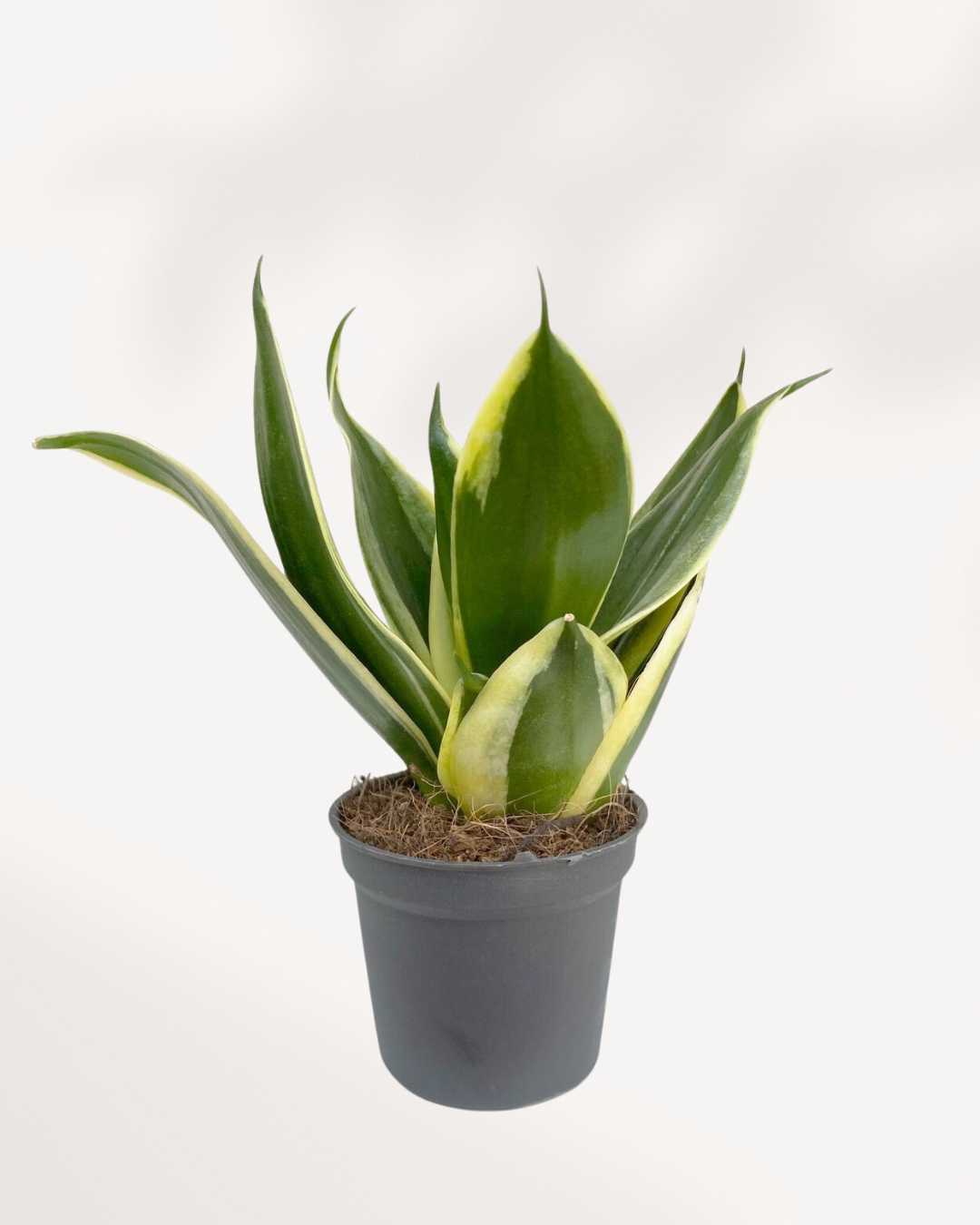
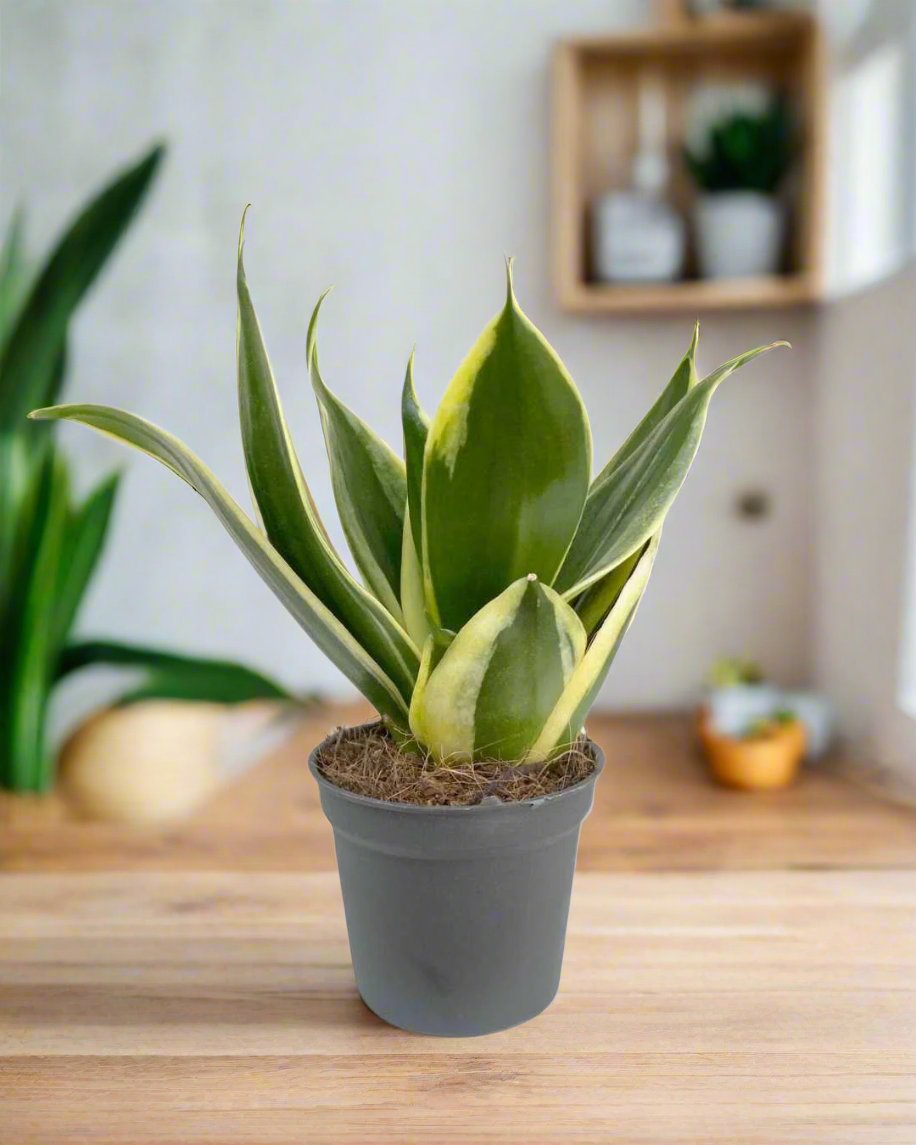
Sansevieria Trifasciata Jade Pagoda, also known as the Snake Plant or Mother-in-Law's Tongue, is a striking indoor plant admired for its upright, sword-like leaves with deep green tones and light horizontal striping. Renowned for its air-purifying qualities and low-maintenance nature, this plant is perfect for beginners and experienced plant lovers alike. Its architectural form adds elegance to modern and traditional spaces, making it a versatile choice for home and office décor.
Common Names
- Jade Pagoda Snake Plant
- Sansevieria Jade Pagoda
- Mother-in-Law's Tongue
- Snake Plant
Botanical Classification
- Kingdom: Plantae
- Order: Asparagales
- Family: Asparagaceae
- Genus: Sansevieria
- Species: Sansevieria trifasciata
Native Habitat
Sansevieria Trifasciata Jade Pagoda is native to tropical West Africa, where it grows in arid, rocky regions. It has adapted to thrive in low-water and low-light conditions, making it ideal for indoor cultivation. Its drought tolerance and ability to purify air have made it a staple in homes worldwide.
Historical and Cultural Significance
The Sansevieria Jade Pagoda has long been prized for its resilience and beauty. Historically, it has been associated with good fortune and protection in several cultures. Its air-purifying properties have also earned it a reputation as one of the best plants for improving indoor air quality.
Uses and Popularity
Sansevieria Jade Pagoda is highly valued for both decorative and functional purposes. Its architectural structure fits seamlessly into modern and minimalist interiors, while its ability to thrive in low-light and drought conditions makes it a popular choice for offices and homes. Additionally, it’s celebrated for improving air quality by filtering toxins.
Conservation Status
Sansevieria Trifasciata Jade Pagoda is widely cultivated and not considered endangered. Its ease of propagation and popularity ensure its availability across nurseries and plant shops worldwide.
Description
Physical Characteristics
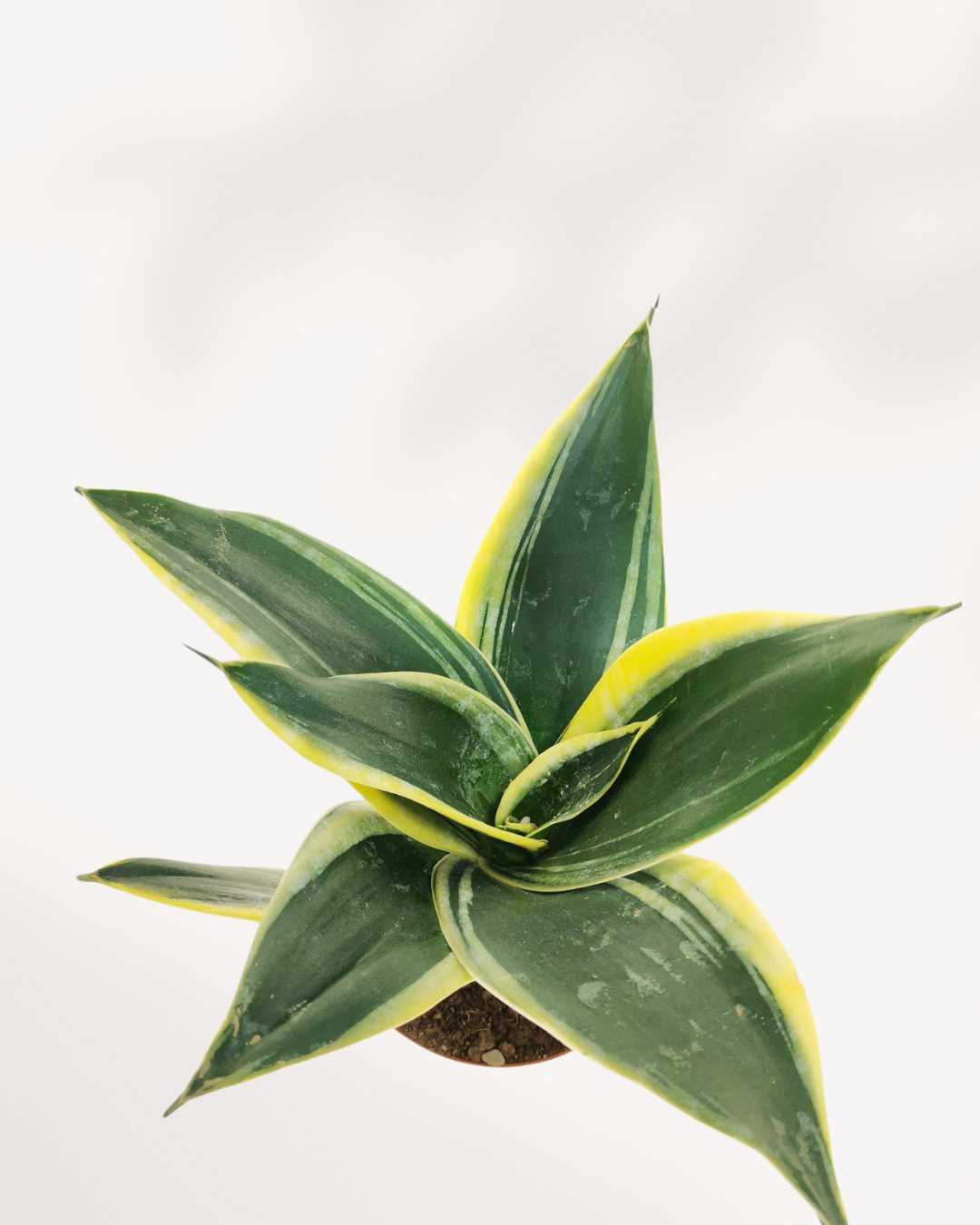
Sansevieria Jade Pagoda features tall, stiff, and upright leaves with rich green coloring and horizontal bands of light green. The leaves form a rosette-like structure, creating an architectural look that complements any space.
Growth Habit
This plant has a slow growth rate and typically reaches heights of 12 to 18 inches (30–45 cm). It thrives in containers and adapts well to both indoor and outdoor environments.
Popular Sansevieria Varieties
Sansevieria Boncel (Starfish Sansevieria)
- Features short, cylindrical leaves that fan out like a star.
Sansevieria Black Coral
- Striking dark green leaves with light gray variegation.
Sansevieria Laurentii (Snake Plant)
- Known for its tall, golden-edged leaves with vertical variegation.
Sansevieria Moonshine
- Silvery-green foliage with a modern, minimalistic appeal.
Sansevieria Cylindrica
- Unique cylindrical leaves arranged in a fan-like formation.
Care Guide
Light Requirements
Sansevieria Jade Pagoda thrives in low to bright, indirect light. It can tolerate low-light environments but grows best in medium light. Avoid prolonged exposure to direct sunlight to prevent leaf burn. Learn More
Watering Needs
Water only when the soil is completely dry. Overwatering can lead to root rot, so it's best to err on the side of underwatering. Indoor Plant Watering
Soil Preferences
Use well-draining, sandy soil or cactus potting mix for best results. A mix with perlite and peat moss improves aeration and drainage. Indoor Potting Mix
Humidity
Sansevieria Jade Pagoda thrives in low humidity and adapts well to dry indoor air, making it a low-maintenance plant.
Common Pests
Spider Mites
Spider mites can cause leaf damage. Regularly wipe leaves with a damp cloth to prevent infestations. Learn More
Mealybugs
Mealybugs appear as white, cotton-like masses. Remove them with alcohol-dipped cotton swabs. Learn More
FAQs
How often should I water Sansevieria Jade Pagoda?
Water when the soil is completely dry, typically every 2–3 weeks.
Can Sansevieria Jade Pagoda grow in low light?
Yes, it can tolerate low light but grows best in medium, indirect light.
Is Sansevieria Jade Pagoda pet-friendly?
No, it is toxic to pets if ingested, so keep it out of reach of animals.
Does Sansevieria Jade Pagoda need fertilizer?
Feed with a diluted cactus fertilizer once a month during the growing season.
How to take care of Sansevieria Trifasciata Jade Pagoda
Sun: Indirect
Sun: Indirect
Light: Low
Light: Low
Water: When fully dry
Water: When fully dry
Humidity: Low
Humidity: Low
Pet Friendly: Caution
Pet Friendly: Caution
Pro Tip
Pro Tip
Shipping and Delivery Details
Shipping and Delivery Details
Shipping across Canada. Orders are packed and shipped within 1-2 business days. Delivery takes 3-5 business days depending on where you are.
30-Day Happy Plant Guarantee
30-Day Happy Plant Guarantee
If your plant arrives damaged or isn't healthy, contact us within 30 days with a photo. We'll sort it out with a replacement, refund, or store credit whichever works best for you. View our complete guarantee policy
Frequently Asked Questions
Frequently Asked Questions
Certainly! If you're pondering about ordering plants online, you're not alone. We've compiled the most frequently asked questions. Check out our FAQ section here for quick answers! Happy planting!
Plant and Pot Size Guide
Plant and Pot Size Guide
4" Pot (Small): plant is approx. 6-10 inches tall. 6" Pot (Medium): approx. 12-18 inches tall. All plants come in a standard nursery pot. Decorative pots are sold separately.
Winter Shipping Protection
Winter Shipping Protection
Between November and March we add extra insulated packaging and heat packs to protect your plant from cold temperatures during transit. You can add winter shipping protection at checkout.
Returns Policy
Returns Policy
If a plant arrives with significant damage, pests, or disease, we offer a full replacement or refund.Our guarantee covers the viability and health of your plant for 30 days.
WATERING MADE EASY
Check soil moisture before watering and use a potting mix that drains well. It’s the secret to healthy, happy plants!
Hear From Happy Plant Parents.
Who have brought Mygreenscape plants into their homes.

