Skip to product information
1 of 3

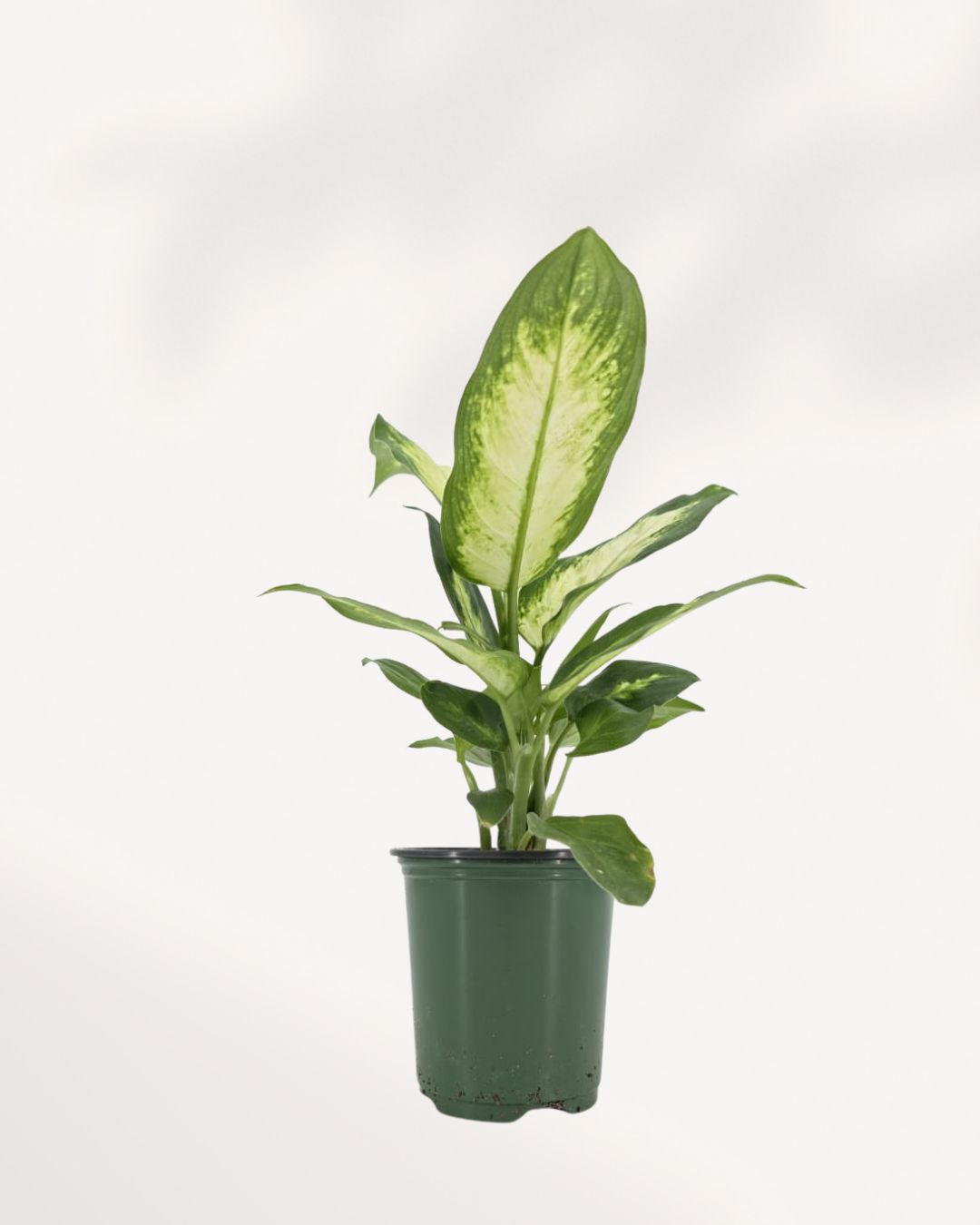
Dieffenbachia Camille

Dieffenbachia Camille

Regular price $12
Regular price Sale price $12
Sale Sold out
Shipping calculated at checkout.
Cleaner air for less — save 15% on the Air-Purifying BundleChoose 3 or more air-purifying plants
Size
🌱 Earn $5 credit per $50 spent
Applied automatically at checkout. Valid 90 days.
Read more

About This Plant

Dieffenbachia Camille is native to the tropical rainforests of Central and South America, where it grows as a large understorey shrub in warm, humid, shaded conditions. It produces broad, oval leaves that can reach 30 to 40 cm long, with a large creamy-white or pale yellow centre that covers most of the leaf surface.

The luminous creamy centre makes it bright. Few large-leaf tropical plants produce leaves with as much pale, almost glowing interior as the Camille. The creamy centre reflects available light back into a room, which makes the plant feel warm and large even in medium indirect light conditions.

Keep it away from pets and children. The ASPCA confirms Dieffenbachia spp. is toxic to cats, dogs, and horses. The leaves contain insoluble calcium oxalate crystals that cause severe oral burning, swelling, and more. This gives the plant its common name Dumbcane. Keep it well out of reach of pets and small children.

It grows fast and handles a wide range of indoor light levels. Dieffenbachia Camille is one of the fastest-growing foliage plants. Under good indirect light it can produce a new full-sized leaf every three to four weeks in the growing season.

Winter Slowdown

Growth slows from November onward but the Camille holds its large luminous leaves well through Canadian winter. It tolerates lower light better than most large tropical plants. Keep temperatures above 16 degrees C, water when the top inch is dry, and keep it away from cold glass and heating vents.

Toxicity

Toxic to cats, dogs, and horses, confirmed by the ASPCA (Dieffenbachia spp.). The leaves contain insoluble calcium oxalate crystals that cause severe burning and swelling of the mouth, tongue, and throat when chewed, along with drooling and temporary difficulty swallowing. Keep it well out of reach of pets and small children. Wear gloves when handling or pruning as the sap can irritate skin.

Pests

Spider mites are the main pest in from November onward, appearing as pale stippling on the large creamy leaf centres where damage is easy to see. Mealybugs appear in leaf axils and at the stem base.

Other Plants You Might Like

Not sure this is the right fit? Here are three other plants our Canadian customers love. All ship across Canada and thrive in Canadian homes.

Dieffenbachia Camouflage. Same family, mottled pattern.

For a Dieffenbachia with a very different mottled military camouflage pattern in multiple greens rather than the clean white centre, the Dieffenbachia Camouflage has a bold, busy pattern and the same fast growth rate.

Dieffenbachia Panther. High contrast and upright.

For a Dieffenbachia with bold silver-white splashes on dark green leaves, the Dieffenbachia Panther has a stronger, more dramatic contrast than the Camille and the same easy care.

Aglaonema Jubilee. Pet-safe and similar light needs.

For a large-leaf plant with a similar creamy-centre look that is confirmed pet-safe, the Aglaonema Jubilee has silver-green marbling and handles the same medium to low light conditions.

Common Questions

How often should I water the Dieffenbachia Camille?

Water when the top inch of soil feels dry. In spring and summer every five to seven days. In a Canadian winter every seven to ten days. The large leaves droop slightly when the plant is thirsty. Never let it sit in standing water. Our indoor plant watering guide shows how to check correctly.

Why are the lower leaves turning yellow and dropping?

Lower leaf drop is normal as Dieffenbachia ages and grows taller. The plant naturally sheds older lower leaves as it puts energy into new growth at the top. This is not a problem unless many leaves are dropping at once, which indicates overwatering, a cold draft, or too little light.

Is the Dieffenbachia Camille toxic to cats and dogs?

Yes. The ASPCA confirms Dieffenbachia spp. is toxic to cats, dogs, and horses. The leaves contain calcium oxalate crystals that cause severe oral burning, swelling, and drooling when chewed. Keep it well out of reach of pets and children. Wear gloves when handling.

What light does it need in a Canadian home?

Medium to bright indirect light is ideal. It handles lower light better than most large tropical plants. A north- or east-facing window works, though brighter light means faster growth. Read our guide to light requirements for indoor plants to find the right spot.

Will it survive a Canadian winter indoors?

Yes, easily. It is one of the more resilient large tropical plants for Canadian winter conditions. Keep temperatures above 16 degrees C, away from cold glass and heating vents. Read our tips on keeping plants alive in winter for more.

Good to Know

Sun: Indirect

Medium to bright indirect light is best. A north- or east-facing window works in Canadian homes. It tolerates lower light better than most large tropical plants, which makes it one of the more practical choices for rooms without direct window access.

Light: Medium to bright indirect

Any indirect window position works year-round. From October to February in Canada, keep it in the brightest indirect spot available. The large luminous leaves make efficient use of available light, which is why it handles lower winter light so well.

Water: When top inch of soil is dry

Water when the top inch feels dry. Every five to seven days in spring and summer. Every seven to ten days in a Canadian winter. The leaves droop slightly when thirsty. Never leave it in standing water as the roots rot quickly.

Humidity: Moderate

Handles average Canadian indoor humidity reasonably well. The creamy leaf centres can brown at the edges in very dry forced-air heating conditions in Ontario and Quebec from November onward. A pebble tray nearby helps.

Pet Friendly: No

Toxic to cats, dogs, and horses, confirmed by the ASPCA. Contains insoluble calcium oxalate crystals that cause severe oral burning, swelling, and drooling when chewed. Keep out of reach of pets and small children. Wear gloves when handling or pruning.

Pro Tip

The broad luminous leaves of the Camille accumulate dust faster than most plants due to their size and flat surface. Dust reduces light absorption. Wipe each leaf with a soft damp cloth once a month, supporting it from below. Clean leaves catch more available winter light.


What To Expect

Shipping and Delivery Details

Choose local GTA delivery, free Richmond Hill pickup, or shipping across Canada. Pick your delivery or pickup date at checkout, we'll have it ready and fresh for you. See full shipping and delivery details.

30-Day Happy Plant Guarantee

If your plant arrives damaged or isn't healthy, contact us within 30 days with a photo. We'll sort it out with a replacement, refund, or store credit whichever works best for you. View our complete guarantee policy

Frequently Asked Questions

Certainly! If you're pondering about ordering plants online, you're not alone. We've compiled the most frequently asked questions. Check out our FAQ section here for quick answers! Happy planting!

Plant and Pot Size Guide

4" Pot (Small): plant is approx. 6-10 inches tall. 6" Pot (Medium): approx. 12-18 inches tall. All plants come in a standard nursery pot. Decorative pots are sold separately.

Winter Shipping Protection

Between November and March we add extra insulated packaging and heat packs to protect your plant from cold temperatures during transit. You can add winter shipping protection at checkout.

Returns Policy

If a plant arrives with significant damage, pests, or disease, we offer a full replacement or refund.Our guarantee covers the viability and health of your plant for 30 days.

View full details

Plant care essentials

Everything you need to keep this plant thriving.

Hear From Happy Plant Parents.

Who have brought Mygreenscape plants into their homes.