
Skip to product information
1 of 2

Succulent, Baby Toes

Succulent, Baby Toes

Regular price $12
Regular price Sale price $12
Sale Sold out
Shipping calculated at checkout.
Cleaner air for less — save 15% on the Air-Purifying BundleChoose 3 or more air-purifying plants
Size
🌱 Earn $5 credit per $50 spent
Applied automatically at checkout. Valid 90 days.
Read more

About This Plant

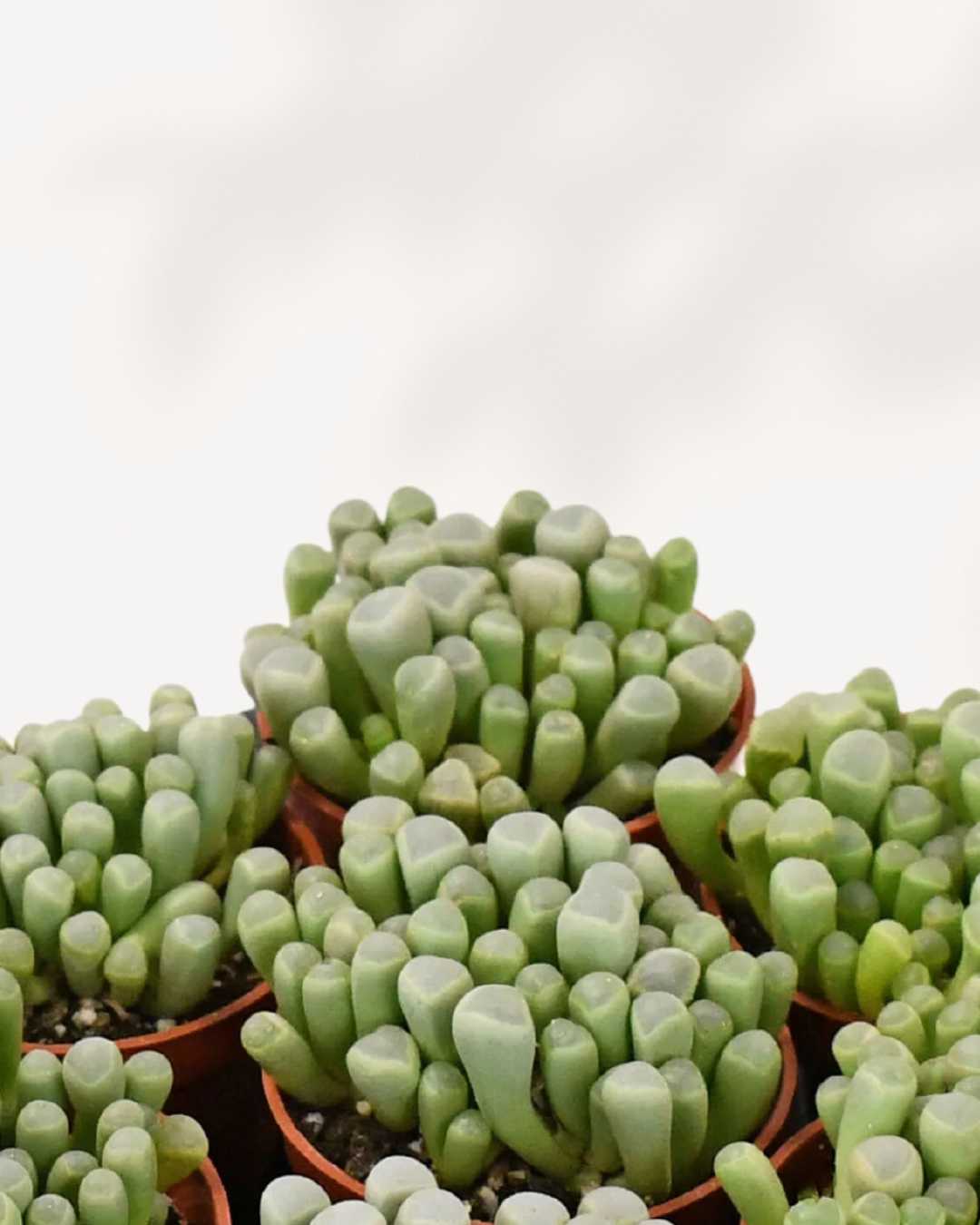
Baby Toes (Fenestraria rhopalophylla) is native to South Africa. It is non-toxic to cats and dogs according to ASPCA. Indoors it grows as a compact cluster of small upright cylindrical leaves, each tipped with a flat transparent window, rarely exceeding 10 centimetres. Needs a sunny position and infrequent watering. Beginner-friendly.

Window-tipped cylindrical leaves; natural light-gathering adaptation.

The transparent tips of Baby Toes leaves act as natural light lenses, allowing sunlight to reach the chlorophyll deep inside the leaf. The tips are clearly flat-topped and slightly translucent, visibly different from the opaque green body of the leaf. The leaves grow in tight clusters of 5 to 10 from the base, each cluster forming a small mound of upright cylindrical leaves. For guidance on positioning succulents in the best light, see plant light requirements.

Drought-tolerant; infrequent watering essential to prevent rot.

Baby Toes is adapted to some of the driest conditions of any indoor succulent. Overwatering causes the leaves to split, turn mushy, and the plant to rot. Water every three to four weeks in the growing season, allowing the soil to dry completely before watering again. In winter, hold watering to once every six to eight weeks or less. For more drought-tolerant plant options, see easy indoor plants for beginners in Canada.

Non-toxic; compact for bright windowsills and collections.

Baby Toes is non-toxic to cats and dogs. It stays compact and slow-growing, making it suited to bright windowsills, succulent collections, and display shelves. For the best spots to display this plant, see where to place houseplants.

Winter Care

Water extremely sparingly in winter, once every six to eight weeks or even less. Baby Toes is not actively growing in winter and excess water in cool, low-light conditions is the fastest route to rot. Keep in the brightest available spot.

Pet Safety

Non-toxic to cats and dogs. A pet-safe succulent for households with animals.

Splitting Leaves

If the leaves split or crack lengthwise, the plant has been overwatered. Splitting leaves mean water intake exceeded the leaf's storage capacity. Reduce watering immediately, check soil drainage, and allow the soil to dry thoroughly before the next watering. Split leaves do not heal but the plant can recover if overwatering stops.

Other Plants You Might Like

Looking for other compact, drought-tolerant succulents for bright windowsills? These three ship across Canada.

Adromischus Succulent

For a compact succulent with patterned flat or club-shaped leaves rather than cylindrical window-tipped ones, the Adromischus succulent shares the compact size, drought tolerance, and bright-light preference of Baby Toes. Baby Toes has the cylindrical window-tipped leaves; Adromischus has the flattened, patterned fleshy leaves.

Tiger Jaws Succulent

For a compact rosette succulent with spiny jaw-like leaf edges rather than cylindrical leaves, the Tiger Jaws succulent shares the small footprint and drought tolerance of Baby Toes. Baby Toes has the compact cylindrical window leaves; Tiger Jaws has the green fleshy leaves with white spiny teeth.

Succulent Ghost Plant

For a larger rosette succulent with powdery pale blue-green fleshy leaves that form an open rosette, the Ghost Plant succulent shares the bright-light preference and drought tolerance of Baby Toes in a larger, more spreading form. Baby Toes grows as a tight cluster of cylindrical leaves; Ghost Plant forms open rosettes of flat, spoon-shaped leaves.

Common Questions

Why are the leaves on my Baby Toes splitting?

Splitting leaves are caused by overwatering. The cylindrical leaves of Baby Toes store water under pressure, and when more water is added before reserves are depleted, the internal pressure exceeds the leaf's capacity and the leaf splits. Stop watering immediately, ensure the pot drains freely, and allow the soil to dry completely. The split leaves will not heal but the plant can produce new healthy growth once watering is corrected.

How often should I water Baby Toes?

Every three to four weeks in the growing season, allowing the soil to dry completely. Once every six to eight weeks or less in winter. See the indoor plant watering guide for seasonal guidance on extreme drought-tolerant succulents.

How much light does Baby Toes need?

Baby Toes needs a bright, sunny position. A south-facing windowsill with direct sunlight is ideal. In lower light the plant etiolates: the cylindrical leaves become taller and thinner as the plant stretches toward the light. The transparent leaf tips require good light to function as intended.

Is Baby Toes safe for pets?

Yes. Baby Toes (Fenestraria rhopalophylla) is non-toxic to cats and dogs. It is a safe choice for households with animals.

Good to Know

Soil: Pure cactus mix or perlite-heavy blend in

A perlite-heavy or pure cactus blend in a small terracotta pot gives the fastest drainage and quickest drying between waterings. Terracotta dries out faster than plastic and reduces the risk of rot significantly.

Light: Full sun or very bright indirect light

A south-facing windowsill is ideal. Baby Toes needs strong direct or near-direct light to maintain its compact, clustered finger form and healthy green colour. Low light causes the leaves to stretch and elongate toward the light source, losing the characteristic stubby shape.

Water: Every 3 to 4 weeks in growing season

Every 6 to 8 weeks or less in winter. Baby Toes is a least frequently watered indoor plants and needs the soil to be bone dry before each watering. Splitting or cracking at the leaf tips is a reliable sign of overwatering rather than underwatering.

Humidity: Tolerates and prefers very dry indoor air

Baby Toes is native to arid regions and thrives in the dry indoor air that Canadian heating creates in winter. High humidity increases the risk of rot and is actively harmful to this plant.

Pet Friendly: Non-toxic to cats and dogs

Safe for pet households. Baby Toes is considered non-toxic to cats and dogs and is a safe choice for pet-friendly homes. No toxicity concern, though contact a vet if your pet eats a large amount of any plant material.

Pro Tip

Baby Toes is kept alive by neglect more reliably than by attention. Water only when the leaves look slightly wrinkled or feel slightly soft rather than firm, which signals that water reserves are genuinely low. Between waterings, the soil should be completely dry all the way to the bottom of the pot, keeping the cylindrical leaves firm and preventing the splitting and rot that overwatering causes.


What To Expect

Shipping and Delivery Details

Choose local GTA delivery, free Richmond Hill pickup, or shipping across Canada. Pick your delivery or pickup date at checkout, we'll have it ready and fresh for you. See full shipping and delivery details.

30-Day Happy Plant Guarantee

If your plant arrives damaged or isn't healthy, contact us within 30 days with a photo. We'll send a replacement or a full refund, and we cover return shipping.

View our complete guarantee policy

Frequently Asked Questions

Certainly! If you're pondering about ordering plants online, you're not alone. We've compiled the most frequently asked questions. Check out our FAQ section here for quick answers! Happy planting!

Plant and Pot Size Guide

4" Pot (Small): plant is approx. 6-10 inches tall. 6" Pot (Medium): approx. 12-18 inches tall. All plants come in a standard nursery pot. Decorative pots are sold separately.

Winter Shipping Protection

Between November and March, you can add Winter Shipping Protection at checkout. It adds insulated packaging and heat packs to protect your plant from the cold in transit. Cold damage is only covered if it's added to your order.

You can add winter shipping protection at checkout.

Returns Policy

If your plant arrives damaged, has pests, or starts to decline within 30 days, we'll send a replacement or a full refund, and we cover return shipping. 

Change of mind, repotted or trimmed plants, and cold damage without Winter Shipping Protection aren't covered. See our full Return Policy

View full details

Plant care essentials

Everything you need to keep this plant thriving.

Hear From Happy Plant Parents.

Who have brought Mygreenscape plants into their homes.