


Couldn't load pickup availability
Applied automatically at checkout. Valid 90 days.
Read more
About This Plant
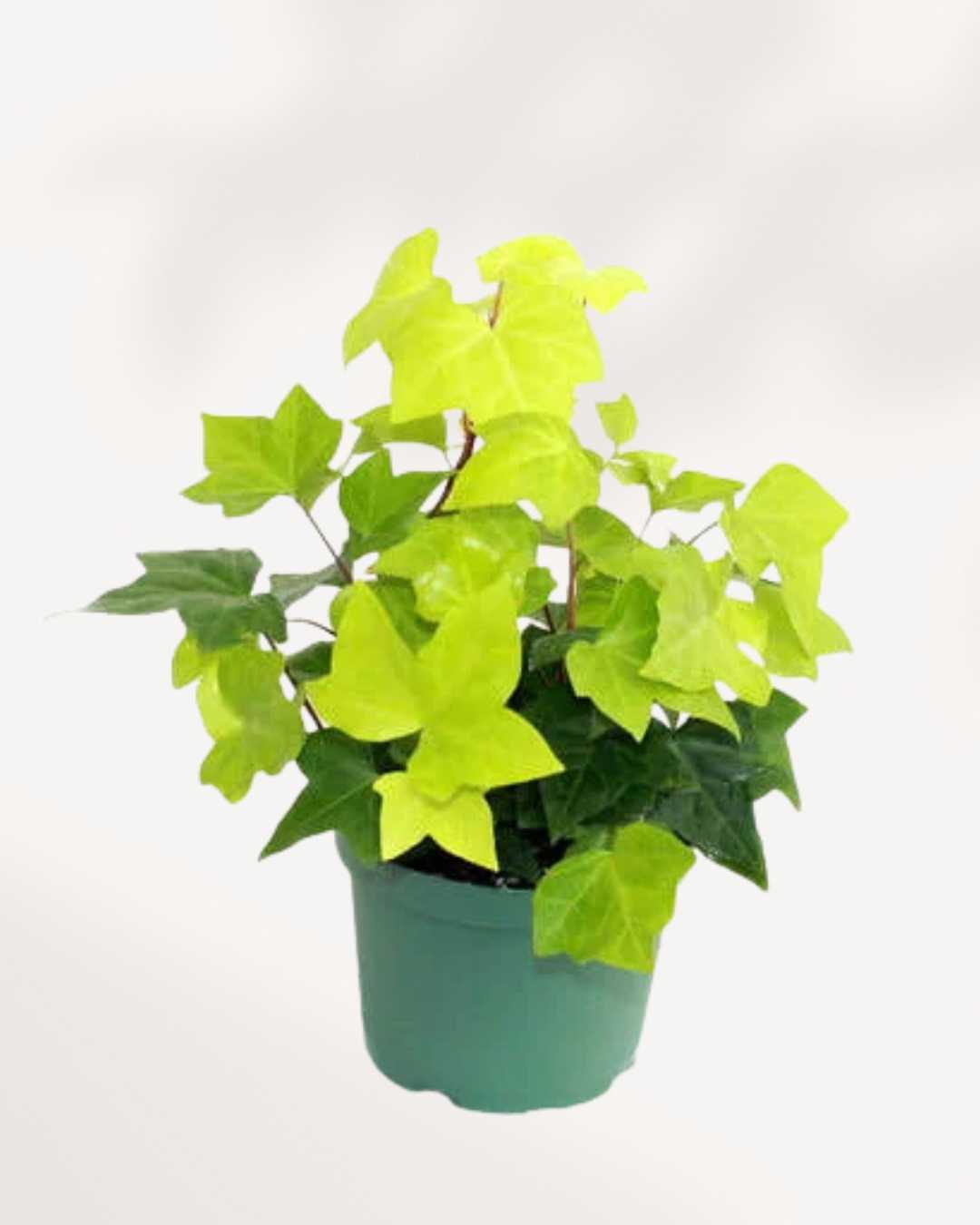
Algerian Ivy Neon (Hedera algeriensis) is native to the coastal forests and shaded cliffs of North Africa and the Mediterranean. It grows large, heart-shaped leaves and is a fast grower than most indoor ivies and fills a hanging basket or trailing shelf quickly.
Other Plants You Might Like
Algerian Ivy Green. Same plant, classic colour.
Golden Pothos. Classic trailer.
Satin Pothos. Silver and trailing.
Common Questions
How often should I water Algerian Ivy Neon indoors?
Water when the top one to two centimetres of soil feels mostly dry. In spring and summer, every five to seven days. In a Canadian winter, every ten to fourteen days. Overwatering leads to root rot. Our indoor plant watering guide shows exactly how to check moisture before you water.
What light does it need in a Canadian home?
Bright to medium indirect light is best. The neon colour is most vivid near a bright east-facing window. It tolerates medium light but grows slower and the colour becomes less intense. Avoid direct afternoon sun which scorches the large leaves. Read our guide to light requirements for indoor plants to find the right spot.
Is Algerian Ivy Neon toxic to cats and dogs?
Hedera algeriensis is not listed in the ASPCA toxic and non-toxic plant database, so its toxicity to cats and dogs cannot be confirmed. Related ivy species in the Hedera genus are confirmed toxic to cats and dogs. Keep it out of reach of pets and small children as a precaution.
Why are the leaves losing their neon colour?
Fading colour almost always means insufficient light. The chartreuse-neon tone requires bright indirect light to stay vivid. Move it closer to an east-facing window, especially from October to February when Canadian daylight is shortest. Too much direct sun causes bleaching, too little causes the colour to green out and darken.
Will it survive a Canadian winter indoors?
Yes. It is not frost hardy and must stay indoors once temperatures drop below 10°C. Keep it between 15 and 24°C and away from cold glass and drafts. Growth slows in winter. Mist the leaves occasionally and check for spider mites more often, as dry heated air is their favourite environment. Our tips on keeping plants alive in winter cover more on this.
How to Take Care of Algerian Ivy Neon
Good to Know
Sun: Indirect
Sun: Indirect
Light: Medium to bright indirect
Light: Medium to bright indirect
Water: When top 1-2 cm of soil is mostly dry
Water: When top 1-2 cm of soil is mostly dry
Humidity: Prefers moderate humidity
Humidity: Prefers moderate humidity
Pet Friendly: Not confirmed, keep out of reach
Pet Friendly: Not confirmed, keep out of reach
Pro Tip
Pro Tip
What To Expect
Shipping and Delivery Details
Shipping and Delivery Details
Choose local GTA delivery, free Richmond Hill pickup, or shipping across Canada. Pick your delivery or pickup date at checkout, we'll have it ready and fresh for you. See full shipping and delivery details.
30-Day Happy Plant Guarantee
30-Day Happy Plant Guarantee
If your plant arrives damaged or isn't healthy, contact us within 30 days with a photo. We'll send a replacement or a full refund, and we cover return shipping.
View our complete guarantee policy
Frequently Asked Questions
Frequently Asked Questions
Certainly! If you're pondering about ordering plants online, you're not alone. We've compiled the most frequently asked questions. Check out our FAQ section here for quick answers! Happy planting!
Plant and Pot Size Guide
Plant and Pot Size Guide
4" Pot (Small): plant is approx. 6-10 inches tall. 6" Pot (Medium): approx. 12-18 inches tall. All plants come in a standard nursery pot. Decorative pots are sold separately.
Winter Shipping Protection
Winter Shipping Protection
Between November and March, you can add Winter Shipping Protection at checkout. It adds insulated packaging and heat packs to protect your plant from the cold in transit. Cold damage is only covered if it's added to your order.
You can add winter shipping protection at checkout.
Returns Policy
Returns Policy
If your plant arrives damaged, has pests, or starts to decline within 30 days, we'll send a replacement or a full refund, and we cover return shipping.
Change of mind, repotted or trimmed plants, and cold damage without Winter Shipping Protection aren't covered. See our full Return Policy


Plant care essentials
Everything you need to keep this plant thriving.


Hear From Happy Plant Parents.
Who have brought Mygreenscape plants into their homes.


