


Couldn't load pickup availability
Applied automatically at checkout. Valid 90 days.
Read more
About This Plant
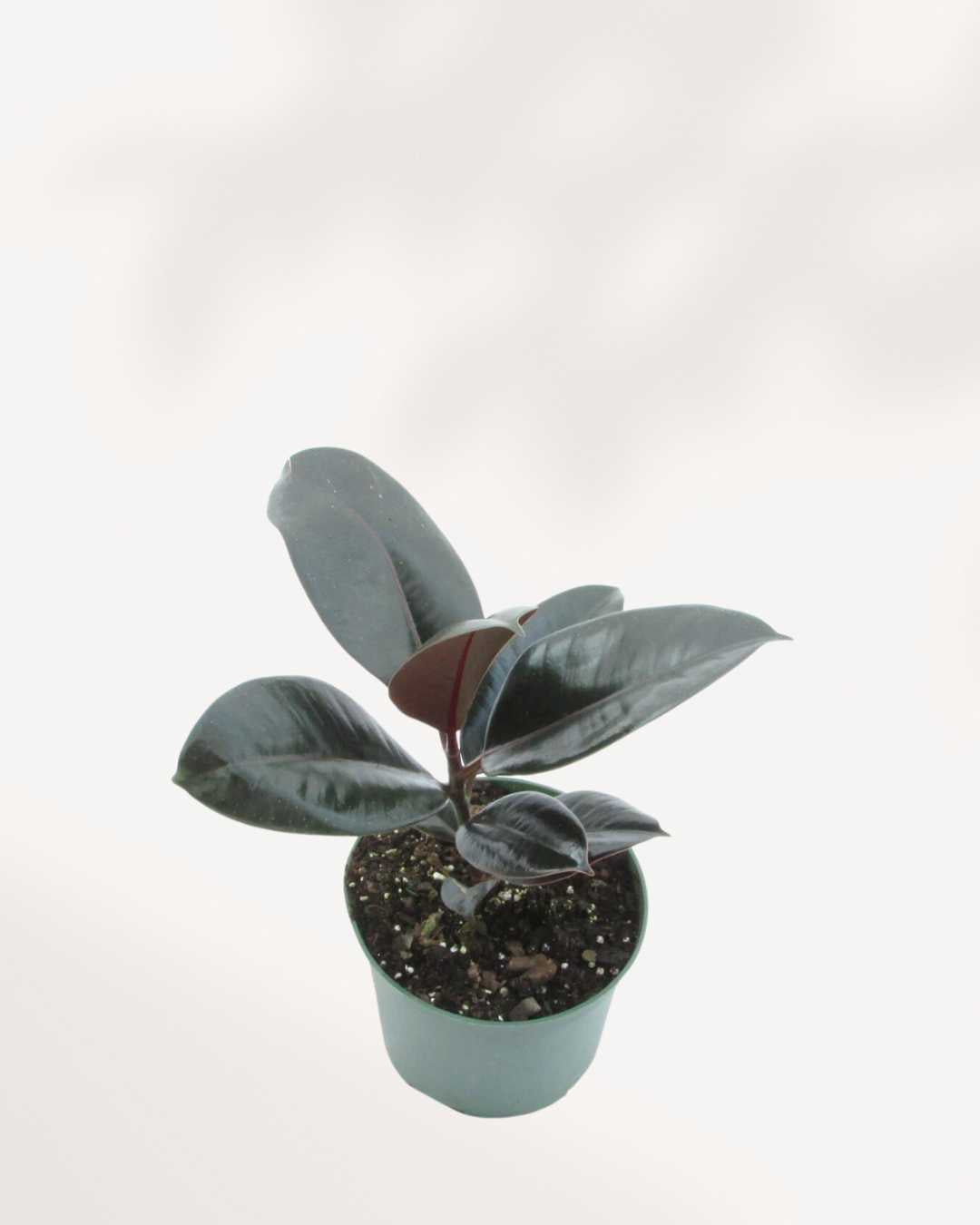
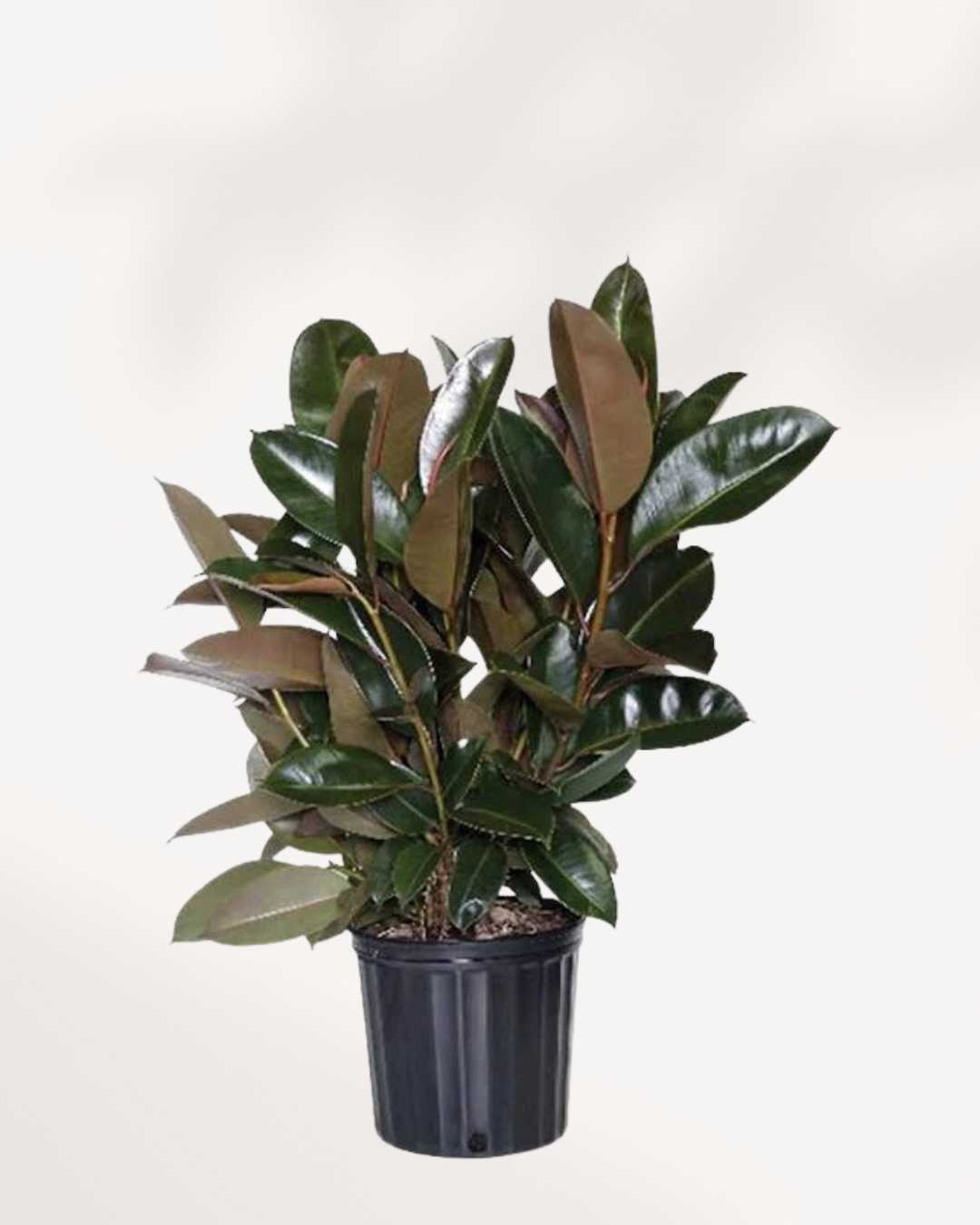
Ficus elastica 'Burgundy' is native to South and Southeast Asia. Toxic to cats and dogs according to ASPCA. Grows as an upright single-stem tree indoors with large, smooth, deep burgundy leaves reaching 6 to 10 feet; better suited to growers with some experience.
Other Plants You Might Like
Fiddle Leaf Fig
Tineke Rubber Plant
ZZ Plant
Common Questions
Why are the leaves of my Rubber Tree dropping?
Leaf drop in Ficus elastica 'Burgundy' is almost always caused by one of three things: overwatering, moving the plant, or a sudden change in conditions such as a draft or temperature shift. Rubber trees are sensitive to change and drop leaves as a stress response. The most effective approach is to find a stable, well-lit position and leave the plant there consistently, water only when the top two to three inches of soil are dry, and keep the plant away from cold drafts and heating vents. Once stable, new leaves should emerge and the plant will recover.
What light does the Rubber Tree Burgundy need?
Bright indirect light produces the richest burgundy colouring and the healthiest growth. In lower light the leaves can appear almost black, which is not damaging but growth slows significantly. The plant tolerates moderate indirect light well but should not be placed in a dark corner. Direct midday sun can bleach or burn the leaves. An east or west-facing window, or a spot beside a bright south-facing window filtered through a sheer curtain, works well.
How often should I water a Rubber Tree?
Water when the top two to three inches of soil are dry, roughly every one to two weeks during the growing season and every two to three weeks in winter. Ficus elastica 'Burgundy' is more tolerant of underwatering than overwatering. Consistently wet soil causes root rot and leaf drop. Use a well-draining potting mix and a pot with drainage holes. See the indoor plant watering guide for seasonal watering guidance.
How big does a Rubber Tree get indoors?
Ficus elastica can reach 6 to 8 feet indoors under good conditions, growing at a moderate pace of roughly 1 to 2 feet per year during the growing season. In a smaller pot with less fertilizer and lower light the growth rate slows considerably. The plant grows primarily upward rather than outward, making it suited to a floor position in a tall-ceilinged room. If height becomes an issue, the growing tip can be pruned to encourage branching, which also produces a fuller, bushier form.
Is the Rubber Tree safe for cats and dogs?
No. Ficus elastica is toxic to cats and dogs. The milky sap contains compounds that cause skin irritation on contact and gastrointestinal symptoms if ingested. Keep the plant out of reach of all pets. When handling the plant for pruning or repotting, wear gloves to avoid skin contact with the sap. Contact a veterinarian if ingestion is suspected.
How to Take Care of a Rubber Tree
Good to Know
Soil: Well-draining potting mix; standard houseplant mix with perlite works well
Soil: Well-draining potting mix; standard houseplant mix with perlite works well
Light: Bright indirect light; best burgundy colour near a bright window without direct midday sun
Light: Bright indirect light; best burgundy colour near a bright window without direct midday sun
Water: When the top 2 to 3 inches of soil are dry; roughly every 1 to 2 weeks in the growing season
Water: When the top 2 to 3 inches of soil are dry; roughly every 1 to 2 weeks in the growing season
Humidity: Standard indoor levels are fine; no supplemental humidity required
Humidity: Standard indoor levels are fine; no supplemental humidity required
Pet Friendly: Toxic to cats, dogs, and humans via sap contact; keep out of reach
Pet Friendly: Toxic to cats, dogs, and humans via sap contact; keep out of reach
Pro Tip
Pro Tip
What To Expect
Shipping and Delivery Details
Shipping and Delivery Details
Choose local GTA delivery, free Richmond Hill pickup, or shipping across Canada. Pick your delivery or pickup date at checkout, we'll have it ready and fresh for you. See full shipping and delivery details.
30-Day Happy Plant Guarantee
30-Day Happy Plant Guarantee
If your plant arrives damaged or isn't healthy, contact us within 30 days with a photo. We'll send a replacement or a full refund, and we cover return shipping.
View our complete guarantee policy
Frequently Asked Questions
Frequently Asked Questions
Certainly! If you're pondering about ordering plants online, you're not alone. We've compiled the most frequently asked questions. Check out our FAQ section here for quick answers! Happy planting!
Plant and Pot Size Guide
Plant and Pot Size Guide
4" Pot (Small): plant is approx. 6-10 inches tall. 6" Pot (Medium): approx. 12-18 inches tall. All plants come in a standard nursery pot. Decorative pots are sold separately.
Winter Shipping Protection
Winter Shipping Protection
Between November and March, you can add Winter Shipping Protection at checkout. It adds insulated packaging and heat packs to protect your plant from the cold in transit. Cold damage is only covered if it's added to your order.
You can add winter shipping protection at checkout.
Returns Policy
Returns Policy
If your plant arrives damaged, has pests, or starts to decline within 30 days, we'll send a replacement or a full refund, and we cover return shipping.
Change of mind, repotted or trimmed plants, and cold damage without Winter Shipping Protection aren't covered. See our full Return Policy


Plant care essentials
Everything you need to keep this plant thriving.


Hear From Happy Plant Parents.
Who have brought Mygreenscape plants into their homes.


