



Just as cute as the Hoya Kerrii plant, it requires extra care. It's a plant with adorable heart-shaped leaves and low maintenance. A little overwatering and it turns yellow, and underwatering may cause the wilting of the plant.
So, what are the best practices to nurture your Hoya Kerri? The good thing is that you don’t have to put much effort into growing Hoya Kerrii at home.
In this guide, we’ll show you all the care tips for this unique plant. We’ll also discuss its various types, how to propagate your Hoya, and common issues during its maintenance.
If you’re ready to grow your own Sweetheart Hoya, browse our Hoya Kerrii Heart plant page for everything you need.
Steps To Hoya Kerrii Care:
- Keep in bright, indirect light for optimal growth.
- Water every 2-3 weeks, ensuring soil dries out.
- Use well-draining soil for healthy roots.
- Maintain average temperatures and moderate humidity.
- Fertilize lightly during the growing season.
- Prune only when necessary to shape the plant.
Now let's start!

Part 1: How to Take Care of Hoya Kerrii Plant?
You can take care of Hoya Kerrii by mimicking the natural habitat of this plant. It's naturally found in the tropical regions of Southeast Asia. If you create a similar environment at home, the plant grows perfectly both indoors and outdoors.
Overview of Hoya Kerrii Plant
Before we give you tips on mimicking that climate, here’s an overview of this plant.
| Characteristic | Details |
|---|---|
| Common Name | Hoya Kerrii, Sweetheart Hoya, Valentine Hoya, Lucky Heart Hoya |
| Botanical Name | Hoya kerrii |
| Family | Apocynaceae |
| Plant Type | Perennial, Succulent, Vine |
| Mature Size | 12–15 feet (as a vine), or remains small if grown as a single leaf |
| Sun Exposure | Bright, indirect light |
| Soil Type | Well-draining, orchid or cactus mix |
| Soil pH | Slightly acidic to neutral (6.0–7.0) |
| Bloom Time | Summer to early fall |
| Flower Color | White, Pink, Light Yellow |
| Hardiness Zones | 11–12 (USDA) |
| Native Area | Southeast Asia (Thailand, Laos, Cambodia, Indonesia, Vietnam) |
Care Tips for Hoya Kerrii Plant:
Follow these care tips, and you’ll create a perfect tropical environment for your Hoya Kerrii Plant.
1. Maintain A Bright, Indirect Light:
You need to give indirect light to your Hoya Kherii. For that:
- Place the plant near an east or west-facing window.
- Use sheer curtains to diffuse the harsh direct sun.
If your space is low on natural light, explore our low-light plant collection for suitable alternatives.

2. Water Every Few Weeks
The Hoya Kerrii plant can store water in its succulent leaves. So, it's better to underwater a Hoya Kerrii than to overwater it.
- Allow the soil to dry out almost completely between waterings.
- Maintain proper watering with a moisture meter.
- Reduce watering significantly in the fall and winter.
To keep your Hoya Kerrii thriving, it’s not just about how often you water it, it’s also about what type of water you use. See whether distilled water is the right choice.”

3. Use Well Draining Soil
Hoya Kerrii is very susceptible to stored water. It’s like poison for the Hoya Heart plant.
- Use a very well-draining potting mix to prevent water retention around the roots.
- A mix designed for cacti and succulents works well.
- Ensure your pot has drainage holes. Terracotta pots are excellent. They help the soil dry out more evenly and quickly.
To support your Hoya's health, explore our Soil & Fertilizer collection for the right mix and nutrients.
4. Maintain Average Warm Temperatures and Moderate Humidity
Hoya Kerrii prefers average room temperatures. Ideally, the temperature should be between 60°F to 80°F (15°C to 27°C).
- Avoid exposing Hoya to temperatures below 50°F.
- Don’t place your Hoya Kerrii near drafts from heating or cooling vents.
- Hoya Kerrii benefits from slightly elevated humidity levels.

5. Give Light Fertilizer During the Growing Season:
You don’t need to give anything except water during fall and winter. It’s only during summer and spring that Hoya requires fertilizer. Still:
- Use a balanced liquid fertilizer diluted to half-strength.
- Feed every 4-6 weeks.
- You can use a fertilizer slightly higher in phosphorus to encourage blooming.
Refer to our indoor plant fertilizer buying guide for expert advice on fertilizers.
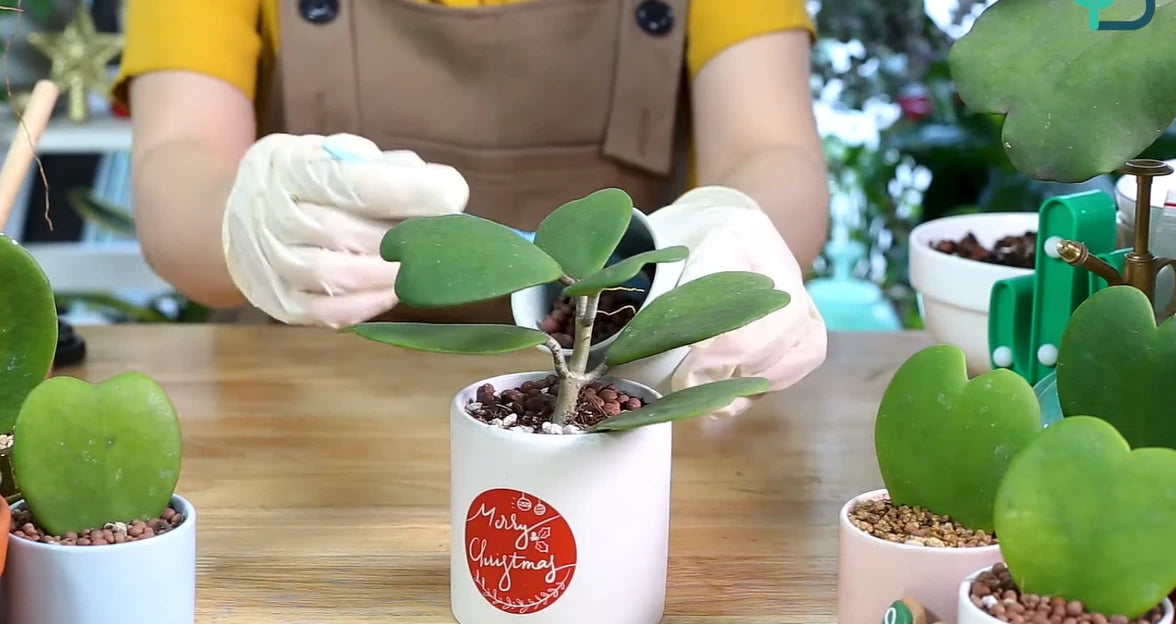
Pro Tip: Plant fertilizers can irritate the skin. So, always wear gloves while handling them.
6. Perform Pruning Only When Required
Pruning is not essential for Hoya Kerrii's health. It’s mainly done to remove any dead or damaged leaves. You can also prune it to control the size and shape of the vine if it becomes too long.
- The best time to prune is in spring or early summer.
- Use clean, sharp scissors or pruning shears.
Pro Tip: Don’t mistakenly remove the flower spurs after blooming. Hoyas often bloom from the same spurs repeatedly.
That’s everything for caring for your Hoya. Follow these tips, and I guarantee your Hoya Heart will stay healthy for years. If you’re new to Hoya care, check out our care for Hoya Plant to help your plant thrive.
Discover the Beauty of Hoya Kerrii: A Heart-Shaped Addition to Your Home:
Add a touch of charm to your indoor space with Hoya kerrii. Known for its heart-shaped leaves, this low-maintenance plant brings beauty and a unique aesthetic to any room.!
Shop NowPart 2: How to Propagate Hoya Kerrii Plant?
You can quickly expand your collection if you know how to propagate Hoya. You can also make multiple small plants and gift them to your loved ones.
So, two methods are mainly used for Hoya Kerrii propagation. They are stem cutting and leaf cutting. Using the stem cuttings is perfect for getting complete, new plants. On the other hand, leaf cuttings are used to make single-leaf Hoya Hearts. They are ideal for gifts.
The steps for both methods are almost the same. Before we show you the detailed method, get these supplies first:
- A healthy Hoya Kerrii mother plant.
- Clean & sharp pruning shears.
- Small pots or containers for cuttings.
- Well-draining potting mix suitable for Hoyas.
- Rooting hormone powder (optional to encourage faster rooting).
Equip yourself with the right tools from our garden tools collection.
Step-by-Step Guide:
Let's see the process of Hoya Kerrii stem cutting step by step.
Step 1: Take the mother plant and look for stems with at least 2-3 leaves and a few nodes. Cut sections of the stem that are about 4-6 inches long.

Step 2: Dip the cut end of each stem cutting into rooting hormone powder. It will speed up root development and improve success rates.

Step 3: Take different jars and fill them with filtered water. Place your stem cuttings in the water and hold them with a pin. You must bury at least one node under the water's surface.
 Pro Tip: Place the pots in a warm location with bright, indirect sunlight. Rooting typically takes several weeks to a couple of months.
Step 4: You need to keep your water clean. Change the water every two weeks and regularly check it.

Step 5: After 1-2 months, roots will emerge from different nodes. Take the stem from the water and cut it at a suitable place according to your pot size.
 Step 6: Fill your pots with the well-draining potting mix. Put some well-draining potting mix at the bottom. Place the Hoya stem in it and fill the pot with soil.

Pro Tip: Gently firm the soil around the base of the cutting to provide support and good soil contact.
Leaf-cutting
If you want a single heart-shaped leaf from Hoya, just cut the leaf. Then, place it in the soil after applying some rooting hormone. However, a single leaf of Hoya Kerrii can never grow into a complete plant unless it contains a piece of stem with a node.
Potting and Repotting Hoya Kerrii Plant
We've added all the details of potting & repotting Hoya Kherii in a table. Let's review it.
| Aspect | Potting | Repotting |
|---|---|---|
| Pot Selection | Use a pot with drainage holes, preferably a small to medium-sized container. | Choose a slightly larger pot (1–2 inches bigger) with good drainage when roots outgrow the current pot. |
| Soil Type | Well-draining orchid mix, cactus mix, or a potting soil blend with perlite and bark. | Use fresh, well-aerated soil to prevent compaction and improve drainage. |
| Planting Process | Place the plant in the center, fill around the roots with soil, and gently press down without compacting. | Remove the plant carefully, shake off old soil, trim damaged roots, and place it in a new pot with fresh soil. |
| Watering | Water lightly after potting, allowing the soil to dry out between waterings to prevent root rot. | Wait 3–5 days before watering after repotting to let roots adjust. |
| Placement | Keep in bright, indirect light; avoid direct, harsh sunlight to prevent leaf scorching. | Return to a similar bright location and avoid drastic environmental changes. |
| Frequency | Initially, the pot is brought home from the nursery or after propagation. | Repot every 2–3 years or when roots become crowded. |
| Signs Needed | First-time planting or shifting from a nursery pot. | Roots emerging from drainage holes, slowed growth, or soil degradation. |
Choosing the correct container is crucial. Explore our pots and planters collection for the best fit.
Part 3: Types of Hoya kerrii Plant
Hoya kerrii has various forms, including hoya krimson queen, Hoya Australis, and speckled varieties. Each type retains the signature heart-shaped leaves but differs in color patterns, making them unique and highly decorative.
Along with their decorative value, these Hoya types can fit well among indoor plants with health benefits.
Type 1- Hoya Krimson Queen
A variegated cultivar of Hoya carnosa, the Krimson Queen has pink, white, and green foliage, making it one of the most visually appealing Hoyas. The variegation appears along the edges of the leaves, with new growth often showing pink tones.

Key Features:
- Green leaves with white or cream variegation on the edges
- New growth emerges in shades of pink
- Produces star-shaped, fragrant pink flowers in mature plants
- Prefers bright, indirect light to maintain vibrant variegation
- Requires well-draining soil and occasional misting for humidity
Type 2- Hoya Australis
Hoya Australis is a fast-growing, vining Hoya with round, glossy green leaves. It is known for its ability to produce clusters of highly fragrant white flowers with a red or pink center. This species is more adaptable and resilient compared to other Hoyas.
For specialized tips on Hoya Australis care, visit our dedicated guide.

Key Features:
- Round, waxy, deep-green leaves,
- Produces clusters of sweet-smelling white flowers,
- Grows more quickly than many other Hoyas,
- Ideal for hanging baskets due to its trailing nature.
Type 3- Hoya Kerrii 'Variegata'
A striking variegated version of Hoya Kerrii with green leaves edged in creamy white or yellow. It is highly decorative and requires more light to maintain variegation.

Key Features:
- Heart-shaped leaves with yellow or cream variegation on the edges
- Slow-growing but develops vines over time
- Requires bright, indirect light for optimal color
- It can be grown as a trailing plant or as a single-leaf cutting
Type 4- Hoya Kerrii 'Splash'
A rare and visually appealing variety with silver or white speckles randomly spread across its green leaves. The “splash” effect makes each leaf unique.

Key Features:
- Green, heart-shaped leaves with silver speckling.
- Tolerates slightly lower light levels compared to variegated Hoyas.
- Produces fragrant star-shaped flowers in mature plants.
- Requires well-draining soil to avoid root rot.
Type 5- Hoya Kerrii 'Albomarginata'
Similar to Hoya Kerrii Variegata, but with more pronounced white or pale yellow margins, creating a striking contrast against the deep green leaves.

Key Features:
- Thick, heart-shaped leaves with bold white or yellow borders
- It can be grown as a trailing vine or as a small potted plant
- Prefers bright, indirect light and moderate humidity
- Produces small, fragrant star-like flowers with proper care
You have learned about these stunning Hoya varieties. There’s so much more to explore in the diverse world of Hoyas. From unique leaf shapes to rare blooming patterns, countless other types of Hoya plants await your discovery.
Enhance your space with the beauty of nature. These carefully selected plants are perfect for adding a refreshing touch to any room. Bird of Paradise
  Jade Plant
 Part 4: What are the Common Problems of the Hoya Kerrii Plant?
Hoya Kerrii, while a popular and relatively easy-care houseplant, can still encounter some common problems. Understanding these potential issues and their solutions is key to keeping your Sweetheart Plant healthy and thriving.
Hoya Kerrii is just one of many easy-care options. See more in our Easy Grower Plants collection.
Below are some common issues with Hoya Kerrii, their causes, and how to fix them.
Issue 1: Root Rot
- Cause: It is mostly caused by watering too frequently or poor drainage. It may also happen if you use dense soil that retains excess moisture.
- Solution: Allow the soil to dry out between waterings and use a well-draining mix like cactus or orchid soil. After that, ensure the pot has drainage holes. If you find rotted roots, then remove them with clean scissors.
Issue 2: Wrinkled Leaves
- Cause: If you don't water the Hoya Kerrii for a long time, it leads to extended dry periods. Ultimately, the dehydration causes wrinkling of leaves.
- Solution: If wrinkling is present, increase the watering of the plant. You need to water when the top inch of soil is dry, but avoid overwatering. Also, increase humidity slightly if the air is too dry.
Issue 3: Yellowing Leaves
- Cause: It happens due to overwatering, nutrient deficiency, or stress from sudden temperature changes.
- Solution: First, adjust the watering schedule and use a well-draining soil. It will solve the issue in most cases. If it's the growing season, then feed the plant with a diluted liquid fertilizer.
To help choose the right product, visit our guide to indoor plant fertilizers.
Issue 4: No New Growth
- Cause: If you see no new growth, then the cause may be low light, inadequate nutrients, or extreme temperatures. All these conditions slow the metabolism of Hoya Kerrii.
- Solution: Place in bright, indirect sunlight and feed with a balanced fertilizer. After that, you need to ensure that the temperatures remain between 60–80°F (16–27°C).
Issue 5: No Flowering
- Cause: It's caused by insufficient light, lack of maturity, or incorrect watering habits.
- Solution: Provide at least 6–8 hours of bright, indirect light. Also, allow the plant to experience a slight drying period, and avoid repotting too often. Hoyas bloom best when slightly root-bound.
Issue 6: Pests (Mealybugs, Aphids, Spider Mites, Scale)
- Cause: Warm, humid conditions around the plant will attract sap-sucking insects.
- Solution: You need to inspect the plant regularly. If you find any sign of insect infestation, wipe leaves with neem oil or insecticidal soap. Also, isolate the infected plant till it recovers.
Issue 7: Brown or Black Spots on Leaves
- Cause: Fungal or bacterial infections occur due to high humidity. It also happens with excessive moisture on leaves.
- Solution: Improve air circulation and avoid misting the leaves directly. Then, remove affected foliage from the plant. You can also apply a fungicide if necessary.
Enhance your indoor environment further with our range of air-purifying plants.
Conclusion
Hoya Kerrii is an excellent plant for home growing and gifting. Its heart-shaped leaves increase the beauty of any home setting. You can also give a single Hoya Heart leaf to your loved ones. We have explained all Hoya Kerrii plant care secrets in this guide. Follow these simple tricks and keep this succulent plant healthy for a lifetime. If you want to add Hoya Kerrii to your home collection, get one in a perfect state from Greenscape.
FAQ's
Q1. Is Hoya Kerrii a pet-friendly plant?
Yes, Hoya Kerrii is considered to be pet-friendly. According to the ASPCA, it is considered non-toxic to dogs, cats, and horses. However, consuming any plant material can cause mild stomach upset.
For more pet-safe and low-light alternatives, see our guide on pet-friendly plants.
Q2: How long does Hoya Kerrii propagation take?
Hoya Kerrii propagation is slower than that of some other hoya varieties. Rooting from stem cuttings usually takes 6-8 weeks. Sometimes, it takes longer due to conditions like temperature and humidity. Leaf cuttings will also take a similar timeframe.
Q3: Can We Propagate Hoya Kerrii in Water?
Yes, Hoya Kerrii can be propagated in water. However, transitioning water-rooted cuttings to soil can sometimes be challenging. Soil propagation is still preferred. It avoids this transition stress and encourages roots to adapt directly to a soil environment.
Q4: How Do I Know If Hoya Kerrii stem cuttings are successfully rooted?
When you gently tug on the cutting, you’ll feel resistance. It indicates that roots have an establishment. After that, new growth is the clearest sign. Look for new leaves emerging from the stem or the lengthening of the stem itself. Healthy, firm cuttings that remain green and don't rot are positive indicators of successful propagation.