


Couldn't load pickup availability
Applied automatically at checkout. Valid 90 days.
Read more
About This Plant
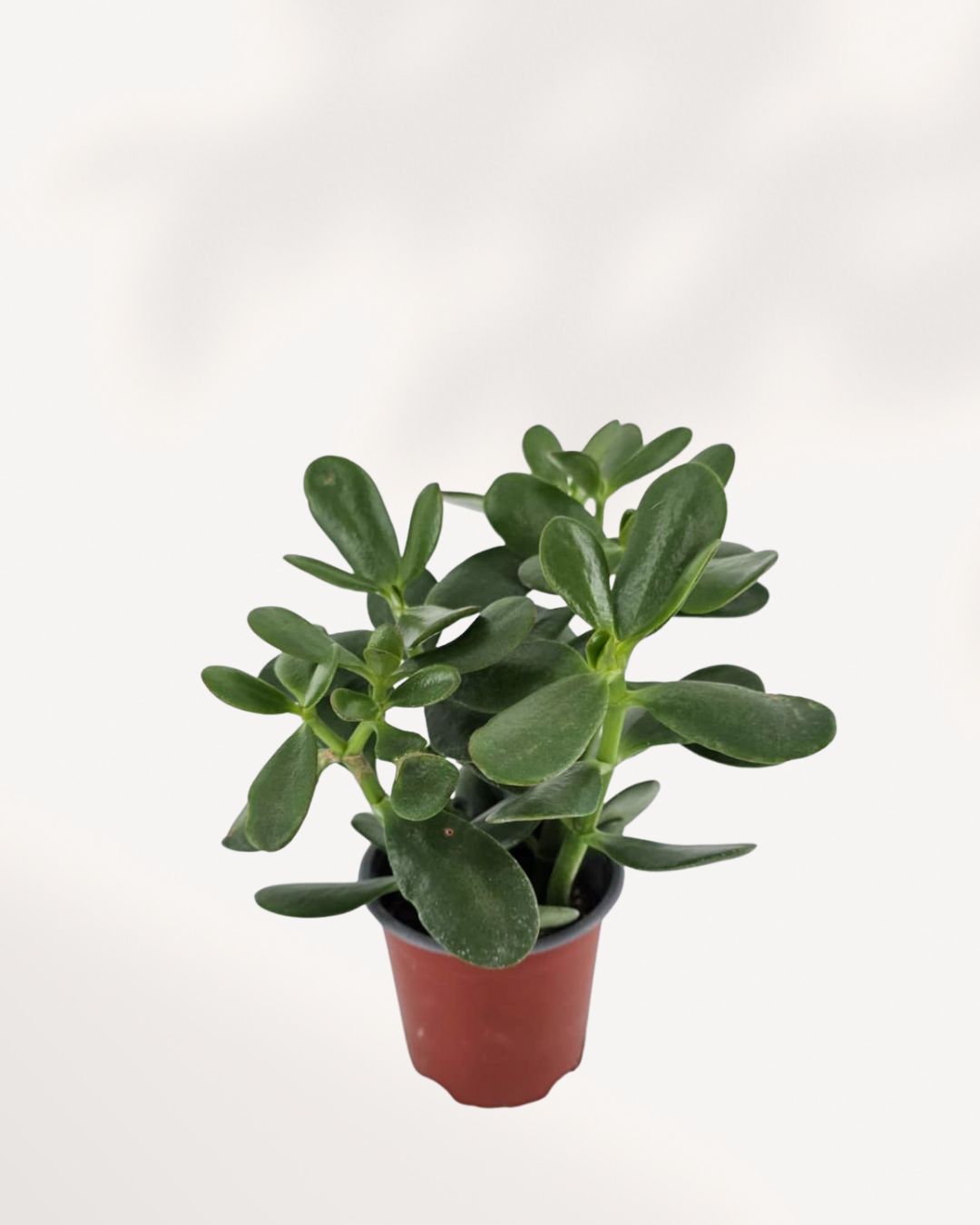
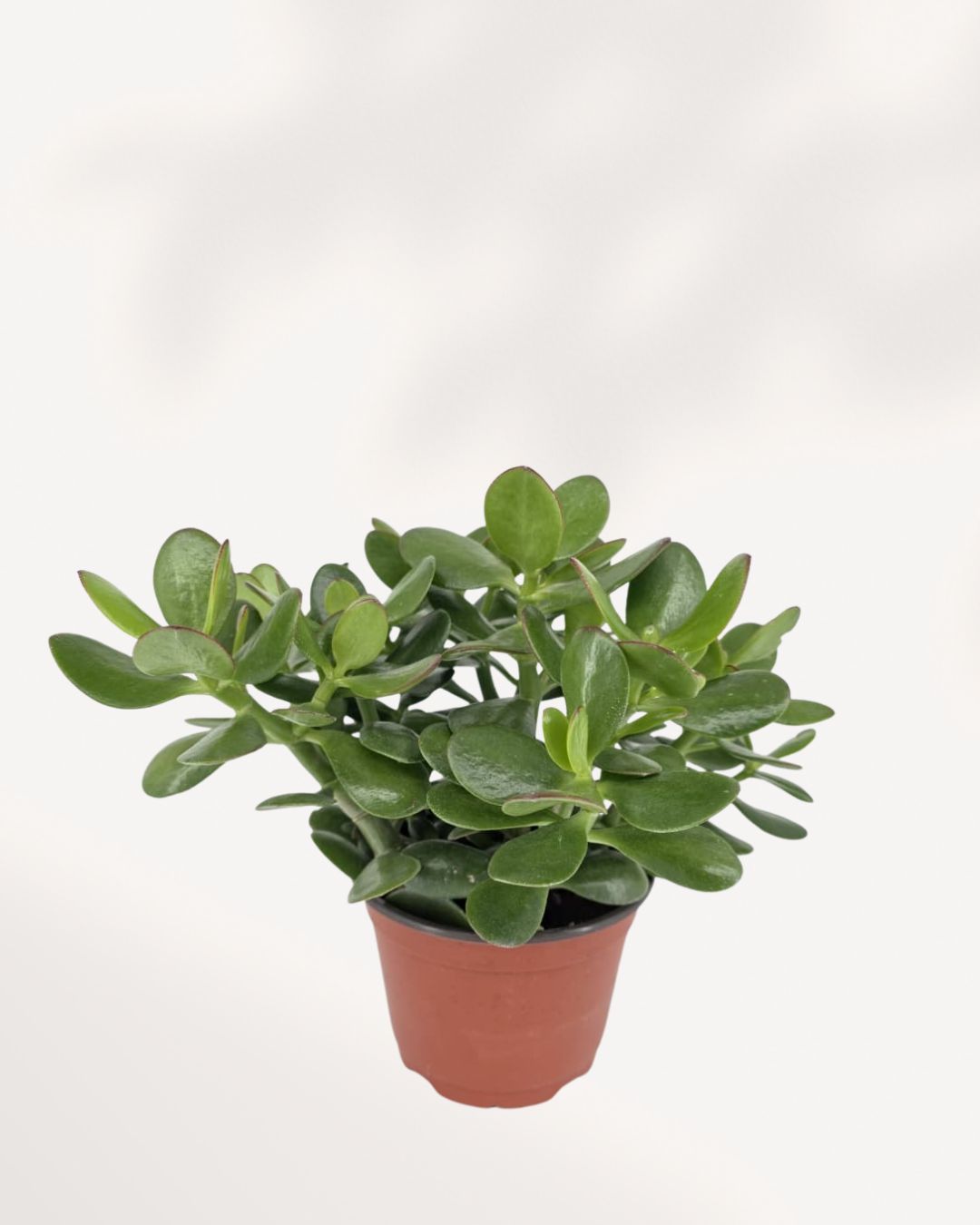
Jade Plant (Crassula ovata) is native to South Africa and Mozambique. It is a slow-growing, and low-maintenance houseplant available. A jade plant that is well cared for can outlive most other houseplants by decades.
Other Plants You Might Like
Ficus Ginseng Bonsai. Sculptural tree form, different character.
Haworthia Succulent. Pet-safe south-facing alternative.
Fairy Castle Cactus. Columnar and near-indestructible.
Common Questions
How long can a Jade Plant live indoors?
Decades. A well-maintained Jade Plant is one of the longest-lived common houseplants. Plants are regularly kept for 20 to 50 years and passed between generations. The slow growth and woody trunk development means a plant 10 years old looks noticeably different and more tree-like than a new plant. The key is consistent care: bright light, infrequent watering, and a proper winter dormancy.
The leaves are shrivelling and going soft. What is wrong?
Shrivelling, soft leaves on Jade Plant are caused by the opposite of what most people assume: underwatering, not overwatering. The thick leaves store water and shrivelling means reserves are depleted. Water the plant thoroughly, allow complete drainage, and the leaves will firm up within a day or two. Overwatered jade plants show mushy stems at the base and yellowing lower leaves, not shrivelling.
Is Jade Plant toxic to cats and dogs?
Yes. The ASPCA confirms Crassula ovata is toxic to cats and dogs. Ingestion causes vomiting, depression, and loss of coordination. Keep out of reach of pets and small children.
Why is my jade plant dropping leaves after being moved?
Jade plants drop leaves in response to being moved, particularly from lower light to higher light or from outdoors to indoors. The dropped leaves are the plant shedding tissue adapted to the old light level. Leaf drop after a move is normal and temporary. Place it in its permanent bright south-facing spot and leave it. New growth will emerge within a few weeks once it settles.
Can I put it outside in summer in Canada?
Yes, and this is one of the best things you can do for a jade plant. From late May through September, a south-facing outdoor position on a Canadian patio or balcony gives it full sun, natural temperature cycles, and outdoor humidity that produces noticeably faster growth and denser branching than indoor conditions. Transition it from indoor to outdoor over one week to prevent sunscorch. Bring it in before the first frost.
How to take care of Jade Plant
Good to Know
Sun: Direct to bright
Sun: Direct to bright
Light: Bright direct
Light: Bright direct
Water: When completely dry
Water: When completely dry
Humidity: Low
Humidity: Low
Pet Friendly: No
Pet Friendly: No
Pro Tip
Pro Tip
What To Expect
Shipping and Delivery Details
Shipping and Delivery Details
Choose local GTA delivery, free Richmond Hill pickup, or shipping across Canada. Pick your delivery or pickup date at checkout, we'll have it ready and fresh for you. See full shipping and delivery details.
30-Day Happy Plant Guarantee
30-Day Happy Plant Guarantee
If your plant arrives damaged or isn't healthy, contact us within 30 days with a photo. We'll send a replacement or a full refund, and we cover return shipping.
View our complete guarantee policy
Frequently Asked Questions
Frequently Asked Questions
Certainly! If you're pondering about ordering plants online, you're not alone. We've compiled the most frequently asked questions. Check out our FAQ section here for quick answers! Happy planting!
Plant and Pot Size Guide
Plant and Pot Size Guide
4" Pot (Small): plant is approx. 6-10 inches tall. 6" Pot (Medium): approx. 12-18 inches tall. All plants come in a standard nursery pot. Decorative pots are sold separately.
Winter Shipping Protection
Winter Shipping Protection
Between November and March, you can add Winter Shipping Protection at checkout. It adds insulated packaging and heat packs to protect your plant from the cold in transit. Cold damage is only covered if it's added to your order.
You can add winter shipping protection at checkout.
Returns Policy
Returns Policy
If your plant arrives damaged, has pests, or starts to decline within 30 days, we'll send a replacement or a full refund, and we cover return shipping.
Change of mind, repotted or trimmed plants, and cold damage without Winter Shipping Protection aren't covered. See our full Return Policy



Plant care essentials
Everything you need to keep this plant thriving.


Hear From Happy Plant Parents.
Who have brought Mygreenscape plants into their homes.


