


Couldn't load pickup availability
Applied automatically at checkout. Valid 90 days.
Read more
About This Plant
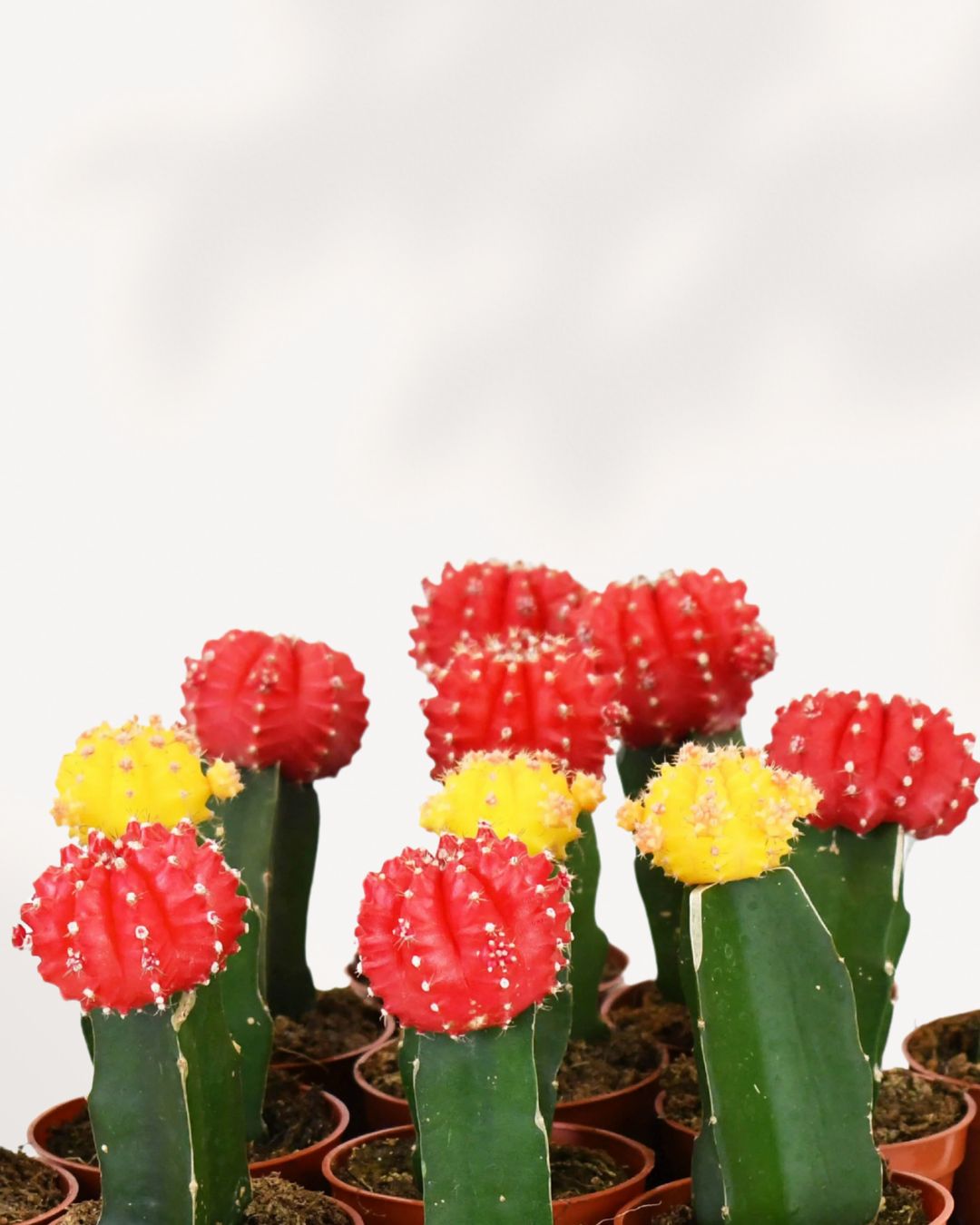
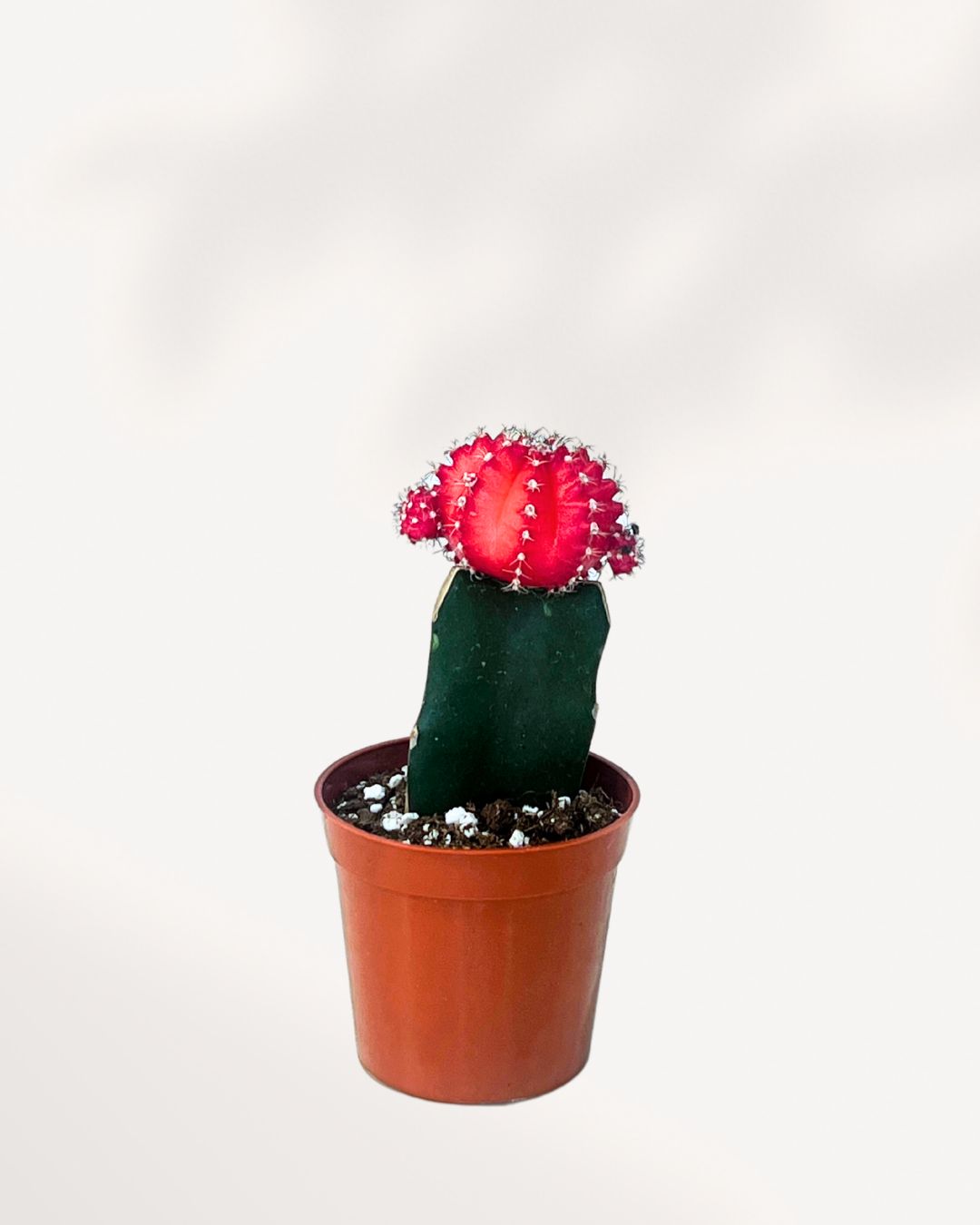
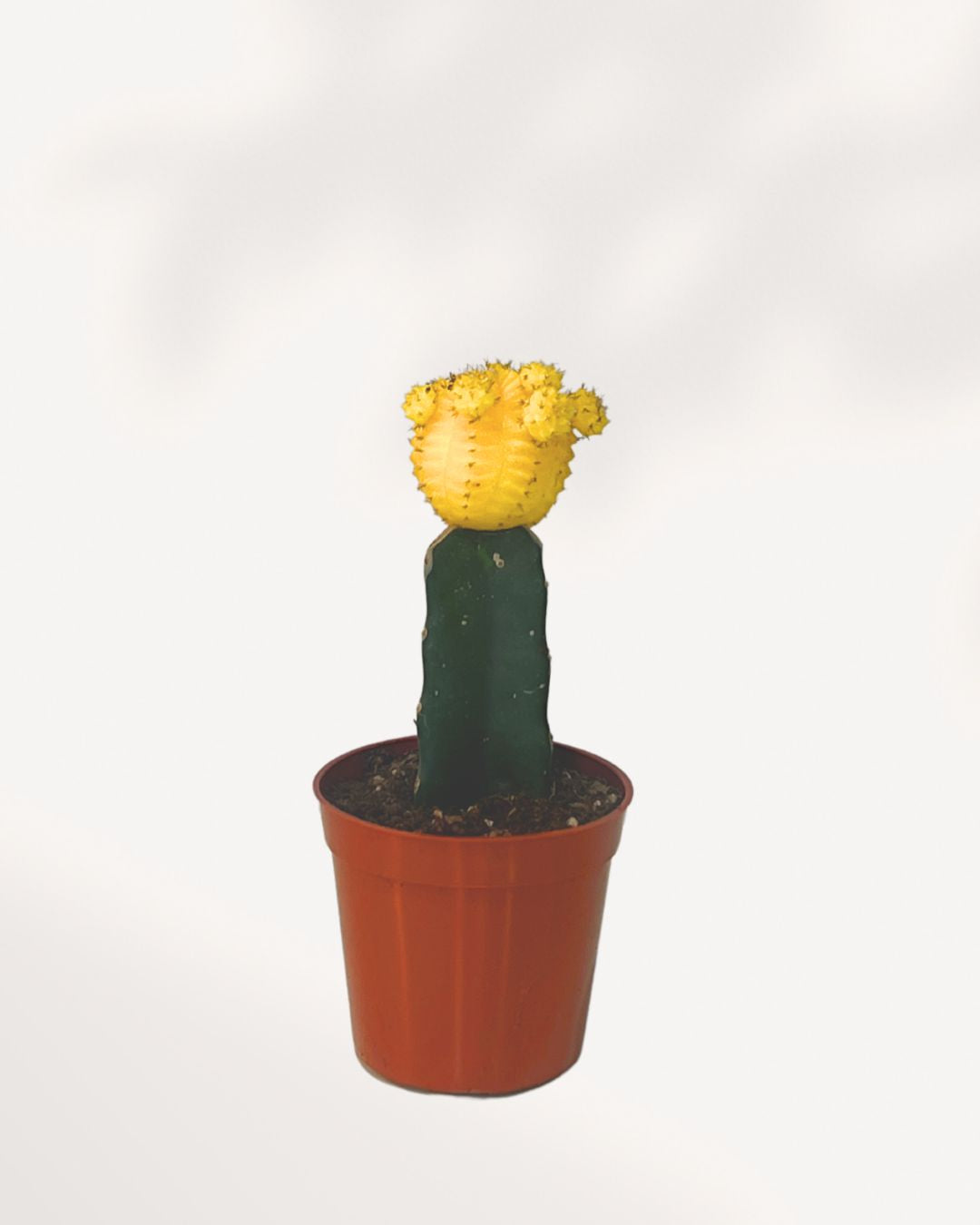
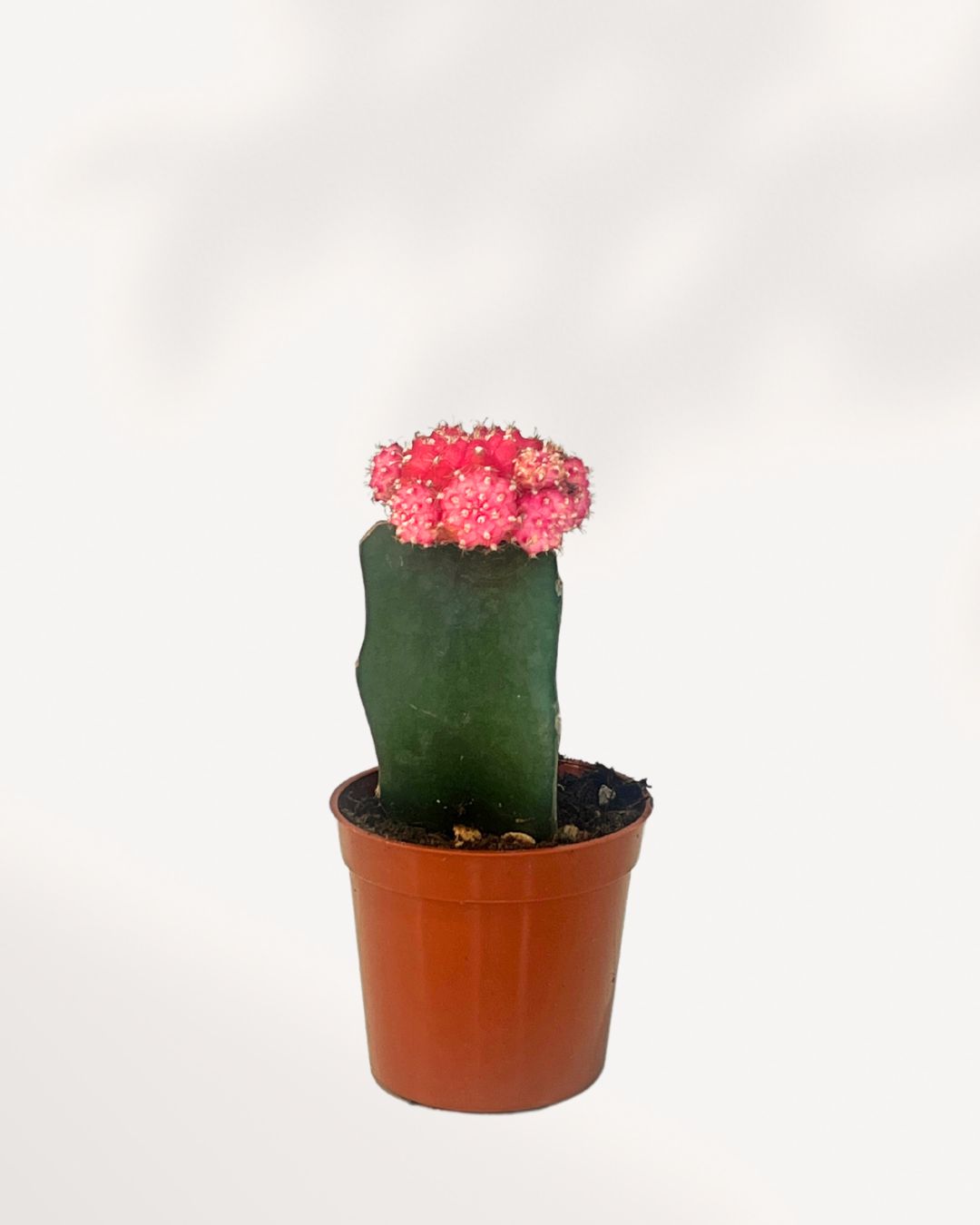
The Moon Cactus (Gymnocalycium mihanovichii) is a miniature grafted cactus native to Paraguay and Argentina. Small and low-maintenance, the Moon Cactus is a cheerful plant for a sunny desk or windowsill.
Other Plants You Might Like
Living Stone Lithops.
Aloe Vera.
Cactus and Succulents Collection.
Common Questions
How long does a Moon Cactus live?
Typically 1 to 3 years, though some well-cared-for specimens last longer. The limiting factor is the graft junction between the coloured top and the green rootstock. Over time the rootstock tends to grow faster than the top, and the junction can fail. If caught early, the coloured top can be re-grafted onto a fresh piece of rootstock to extend its life.
Why is my Moon Cactus shrinking or wrinkling?
A shrunken or wrinkled top cactus is most often a sign of underwatering, especially in spring and summer. Water thoroughly and see if the top firms up within a few days. If watering does not help and the base feels soft, check the graft junction for rot. A wrinkled, soft base that smells bad indicates root rot from overwatering rather than drought.
How often should I water a Moon Cactus?
Allow the soil to dry mostly or fully between waterings. In summer, watering every 2 to 3 weeks is typically enough. In winter dormancy, reduce to once every 4 to 6 weeks or less. Always use a pot with drainage holes and a well-draining cactus mix. Never let the plant sit in standing water, as the graft junction is particularly vulnerable to rot.
Is Moon Cactus toxic to cats and dogs?
Gymnocalycium mihanovichii is not currently listed in the ASPCA toxic plant database and is generally considered to have low toxicity risk. However, the physical spines on both the coloured top and the green rootstock are a real hazard and can puncture paws, noses, and mouths. Keep it out of reach of pets and young children to avoid injury from the spines.
Why is my Moon Cactus losing its colour?
Two causes: insufficient light or natural ageing. If the rootstock is not receiving enough light to produce adequate nutrients, the top may fade or become paler over time. Move the plant to a brighter location first. Some colour fading is also a natural part of ageing in older specimens, especially at the graft junction begins to weaken.
How to Take Care of Moon Cactus
Good to Know
Graft Care: Keep the junction dry
Graft Care: Keep the junction dry
Light: Bright indirect, some morning sun tolerated
Light: Bright indirect, some morning sun tolerated
Watering: Sparingly, allow to dry between waterings
Watering: Sparingly, allow to dry between waterings
Humidity: Any
Humidity: Any
Pet Friendly: Use caution
Pet Friendly: Use caution
Pro Tip
Pro Tip
What To Expect
Shipping and Delivery Details
Shipping and Delivery Details
Choose local GTA delivery, free Richmond Hill pickup, or shipping across Canada. Pick your delivery or pickup date at checkout, we'll have it ready and fresh for you. See full shipping and delivery details.
30-Day Happy Plant Guarantee
30-Day Happy Plant Guarantee
If your plant arrives damaged or isn't healthy, contact us within 30 days with a photo. We'll send a replacement or a full refund, and we cover return shipping.
View our complete guarantee policy
Frequently Asked Questions
Frequently Asked Questions
Certainly! If you're pondering about ordering plants online, you're not alone. We've compiled the most frequently asked questions. Check out our FAQ section here for quick answers! Happy planting!
Plant and Pot Size Guide
Plant and Pot Size Guide
4" Pot (Small): plant is approx. 6-10 inches tall. 6" Pot (Medium): approx. 12-18 inches tall. All plants come in a standard nursery pot. Decorative pots are sold separately.
Winter Shipping Protection
Winter Shipping Protection
Between November and March, you can add Winter Shipping Protection at checkout. It adds insulated packaging and heat packs to protect your plant from the cold in transit. Cold damage is only covered if it's added to your order.
You can add winter shipping protection at checkout.
Returns Policy
Returns Policy
If your plant arrives damaged, has pests, or starts to decline within 30 days, we'll send a replacement or a full refund, and we cover return shipping.
Change of mind, repotted or trimmed plants, and cold damage without Winter Shipping Protection aren't covered. See our full Return Policy
Plant care essentials
Everything you need to keep this plant thriving.


Hear From Happy Plant Parents.
Who have brought Mygreenscape plants into their homes.


