


Couldn't load pickup availability
Applied automatically at checkout. Valid 90 days.
Read more
About This Plant
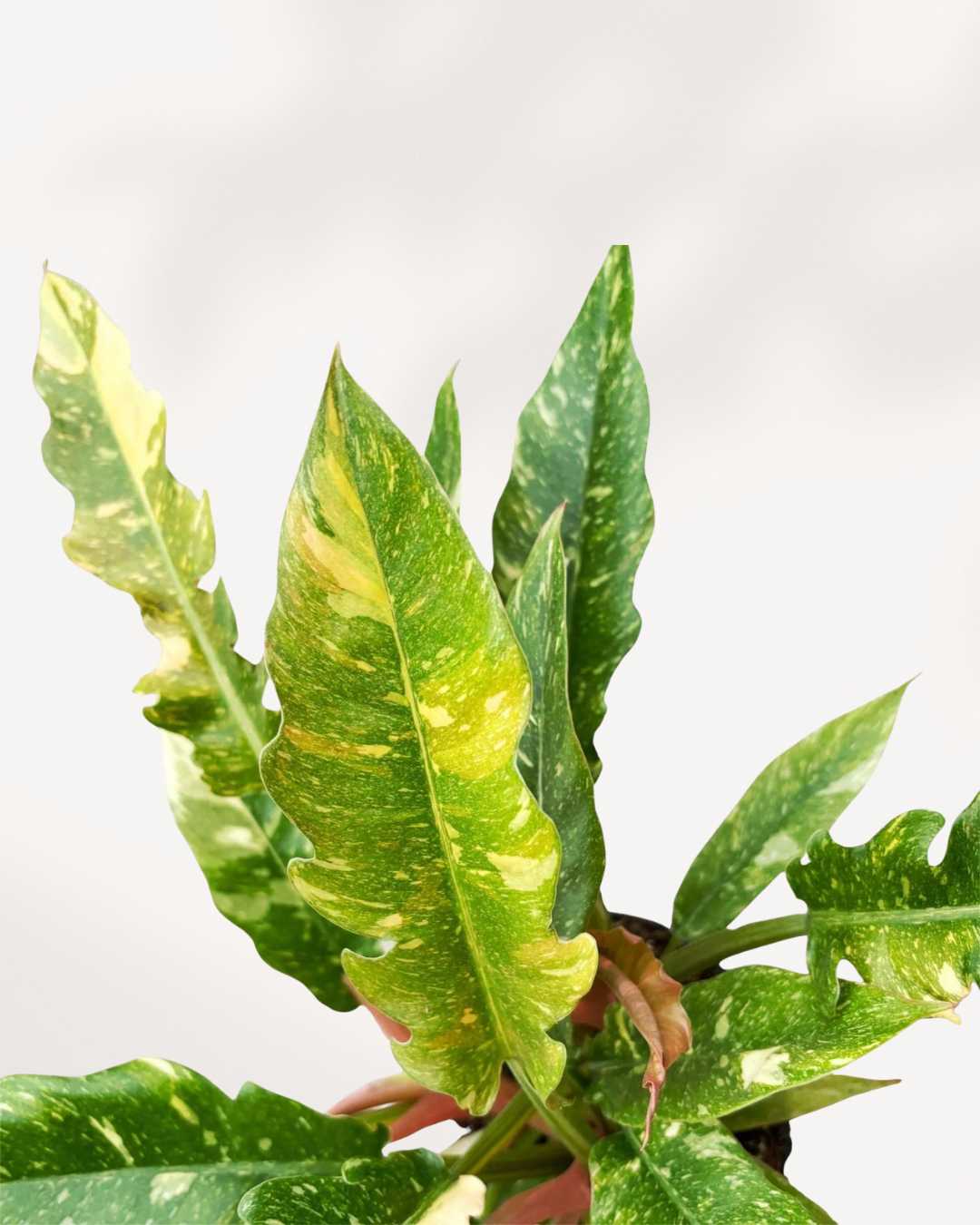
A rare hybrid believed to be a cross of Philodendron wendlandii and Philodendron tortum, also known as Henderson's Pride. Toxic to cats, dogs, and children according to ASPCA. It grows as a slow climber with short internodes and produces noticeably larger leaves when given a moss pole or trellis. Best suited to growers with some philodendron experience.
Other Plants You Might Like
Philodendron Tortum
Philodendron Silver Sword
Philodendron Pink Princess
Common Questions
Why are the new leaves on my Ring of Fire coming in mostly green?
The red, yellow, and orange tones in Philodendron Ring of Fire depend heavily on light. In low light, the plant produces more chlorophyll to compensate, which results in new leaves coming in mostly green with little visible variegation. Move the plant to a spot with bright, filtered indirect light. Within a few growth cycles you should see stronger colour returning on new leaves. Avoid direct sun through glass, which can scorch the serrated edges.
Does Philodendron Ring of Fire need a moss pole?
It does not need one to survive, but it performs noticeably better with support. Without a pole it stays compact and may trail or sprawl. On a moss pole it climbs and produces larger leaves with more pronounced serration. Because it grows slowly, the pole does not need to be very tall to begin with. Keep it damp to encourage aerial root attachment as the plant climbs. See philodendron care tips for more on setting up a support.
How often should I water Philodendron Ring of Fire?
Wait until the top half of the soil has dried out before watering again. In a chunky aroid mix this is roughly every 7 to 10 days during the growing season and longer in winter. The chunky mix drains fast, which reduces the risk of rot, but overwatering is still the main reason Ring of Fire declines. When in doubt, wait a few more days before watering.
Is Philodendron Ring of Fire rare?
Yes, it remains genuinely rare compared to most philodendrons. It is a slow grower, which means supply stays limited even from dedicated growers. The colour variation between individual plants also makes some specimens more sought-after than others. Plants with strong red tones on the new leaves or dramatic orange transitions are harder to find than those showing mostly cream and yellow.
Can I propagate Philodendron Ring of Fire?
Yes, by stem cuttings. Take a cutting with at least one node and one leaf, place it in water or a moist aroid mix, and keep it warm and humid. Roots typically emerge in two to four weeks. The variegation pattern on new growth from a cutting is unpredictable and may differ from the parent plant. Because Ring of Fire grows slowly, rooted cuttings take longer to develop into a full plant than faster philodendrons.
How to Take Care of Philodendron Ring of Fire
Good to Know
Soil: Chunky aroid mix with orchid bark, perlite, charcoal, and potting soil
Soil: Chunky aroid mix with orchid bark, perlite, charcoal, and potting soil
Light: Bright indirect light; keeps flame-like variegation strong on new leaves
Light: Bright indirect light; keeps flame-like variegation strong on new leaves
Water: Top half of soil dry before watering; chunky aroid mix drains faster than standard potting soil
Water: Top half of soil dry before watering; chunky aroid mix drains faster than standard potting soil
Humidity: Above 50%; use a humidifier in dry Canadian winters
Humidity: Above 50%; use a humidifier in dry Canadian winters
Toxicity: Toxic to cats, dogs, and children; keep completely out of reach
Toxicity: Toxic to cats, dogs, and children; keep completely out of reach
Pro Tip
Pro Tip
What To Expect
Shipping and Delivery Details
Shipping and Delivery Details
Choose local GTA delivery, free Richmond Hill pickup, or shipping across Canada. Pick your delivery or pickup date at checkout, we'll have it ready and fresh for you. See full shipping and delivery details.
30-Day Happy Plant Guarantee
30-Day Happy Plant Guarantee
If your plant arrives damaged or isn't healthy, contact us within 30 days with a photo. We'll send a replacement or a full refund, and we cover return shipping.
View our complete guarantee policy
Frequently Asked Questions
Frequently Asked Questions
Certainly! If you're pondering about ordering plants online, you're not alone. We've compiled the most frequently asked questions. Check out our FAQ section here for quick answers! Happy planting!
Plant and Pot Size Guide
Plant and Pot Size Guide
4" Pot (Small): plant is approx. 6-10 inches tall. 6" Pot (Medium): approx. 12-18 inches tall. All plants come in a standard nursery pot. Decorative pots are sold separately.
Winter Shipping Protection
Winter Shipping Protection
Between November and March, you can add Winter Shipping Protection at checkout. It adds insulated packaging and heat packs to protect your plant from the cold in transit. Cold damage is only covered if it's added to your order.
You can add winter shipping protection at checkout.
Returns Policy
Returns Policy
If your plant arrives damaged, has pests, or starts to decline within 30 days, we'll send a replacement or a full refund, and we cover return shipping.
Change of mind, repotted or trimmed plants, and cold damage without Winter Shipping Protection aren't covered. See our full Return Policy

Plant care essentials
Everything you need to keep this plant thriving.


Hear From Happy Plant Parents.
Who have brought Mygreenscape plants into their homes.

