


Couldn't load pickup availability
Applied automatically at checkout. Valid 90 days.
Read more
About This Plant
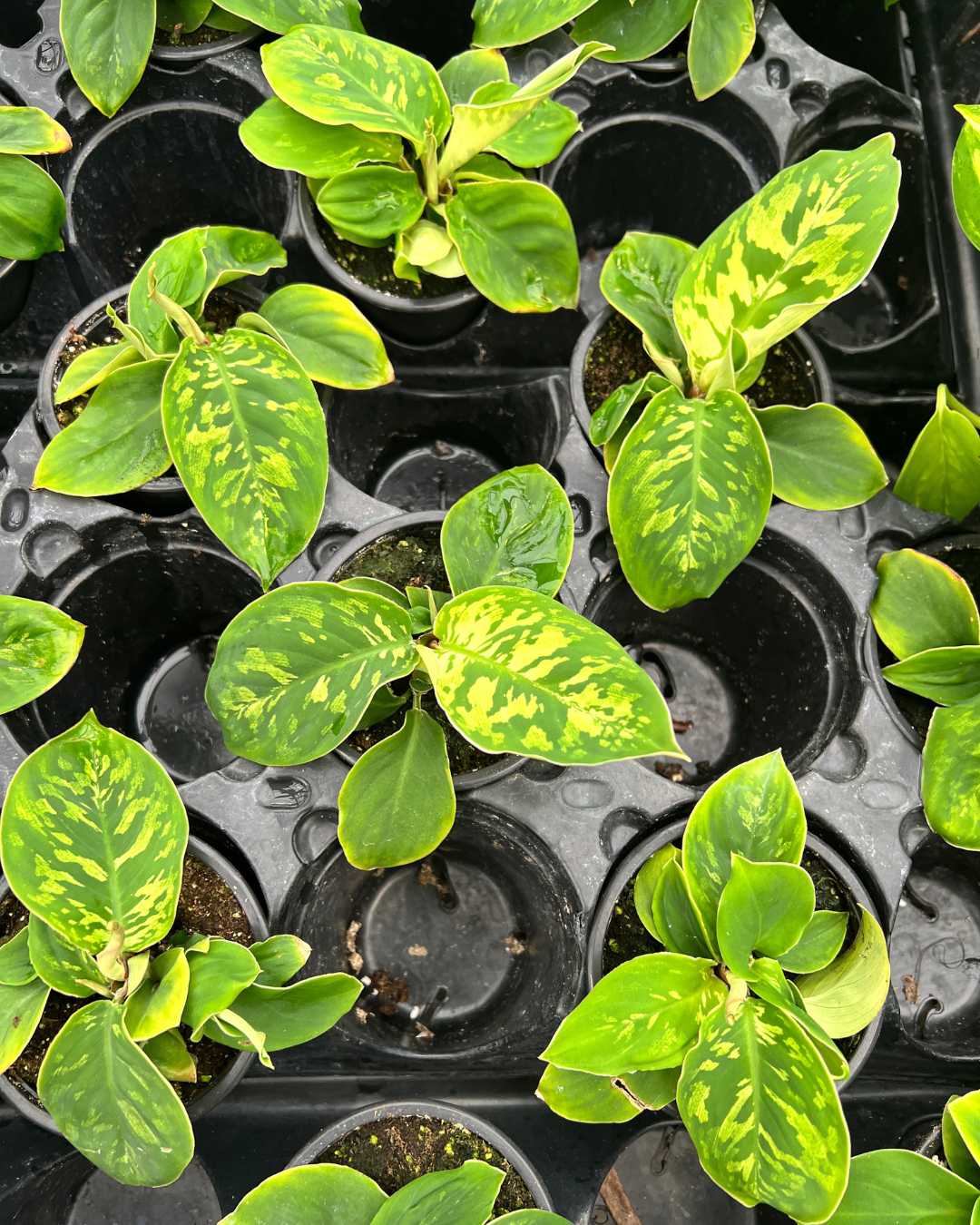
Homalomena Camouflage is native to the tropical forests of Southeast Asia. It produces broad, glossy, heart-shaped leaves in a rich mottled pattern of multiple green tones, Each leaf is large and has a high-gloss surface that catches light.
Other Plants You Might Like
Dieffenbachia Camouflage. Similar pattern, matte leaves.
Aglaonema Jubilee. Pet-safe low-light alternative.
Calathea Musaica Network. Detailed pattern, pet-safe.
Common Questions
Why are the large leaves yellowing at the base?
Lower leaf yellowing on Homalomena is most commonly caused by overwatering. The large root system rots quickly in waterlogged soil. Let the top inch dry out between waterings and ensure excellent drainage. If multiple leaves are yellowing rapidly, check the roots for rot at the next watering.
How is it different from Dieffenbachia?
Homalomena and Dieffenbachia both belong to the aroid family and can look similar in pattern. Homalomena leaves tend to be glossier, more heart-shaped at the base, and the plant is generally faster-growing and more tolerant of lower light. Homalomena also tends to stay more upright without the leggy lower-stem exposure that Dieffenbachia develops over time.
Is Homalomena Camouflage toxic to cats and dogs?
Yes. The ASPCA confirms Homalomena spp. is toxic to cats and dogs. The leaves contain calcium oxalate crystals causing oral burning, drooling, and vomiting if chewed. Keep out of reach of pets and small children.
The glossy leaves have lost their shine. What causes this?
Dust is the most common cause. The large glossy surface accumulates a layer of fine dust from the air that is invisible until it noticeably dulls the sheen. Wipe each leaf with a soft damp cloth. Also check that the plant is not getting direct sun, which can bleach the surface gloss from the leaf over time.
What light does it need in a Canadian home?
Low to medium indirect light. This is one of its main practical advantages. A north-facing room, a dim corner, or a bright indirect east-facing position all work. Growth is fastest in medium indirect light but the plant stays healthy even in genuinely low light. Read our guide to light requirements for indoor plants for more.
How to take care of Homalomena Camouflage
Good to Know
Sun: Indirect
Sun: Indirect
Light: Low to medium indirect
Light: Low to medium indirect
Water: When top inch is dry
Water: When top inch is dry
Humidity: Moderate
Humidity: Moderate
Pet Friendly: No
Pet Friendly: No
Pro Tip
Pro Tip
What To Expect
Shipping and Delivery Details
Shipping and Delivery Details
Choose local GTA delivery, free Richmond Hill pickup, or shipping across Canada. Pick your delivery or pickup date at checkout, we'll have it ready and fresh for you. See full shipping and delivery details.
30-Day Happy Plant Guarantee
30-Day Happy Plant Guarantee
If your plant arrives damaged or isn't healthy, contact us within 30 days with a photo. We'll send a replacement or a full refund, and we cover return shipping.
View our complete guarantee policy
Frequently Asked Questions
Frequently Asked Questions
Certainly! If you're pondering about ordering plants online, you're not alone. We've compiled the most frequently asked questions. Check out our FAQ section here for quick answers! Happy planting!
Plant and Pot Size Guide
Plant and Pot Size Guide
4" Pot (Small): plant is approx. 6-10 inches tall. 6" Pot (Medium): approx. 12-18 inches tall. All plants come in a standard nursery pot. Decorative pots are sold separately.
Winter Shipping Protection
Winter Shipping Protection
Between November and March, you can add Winter Shipping Protection at checkout. It adds insulated packaging and heat packs to protect your plant from the cold in transit. Cold damage is only covered if it's added to your order.
You can add winter shipping protection at checkout.
Returns Policy
Returns Policy
If your plant arrives damaged, has pests, or starts to decline within 30 days, we'll send a replacement or a full refund, and we cover return shipping.
Change of mind, repotted or trimmed plants, and cold damage without Winter Shipping Protection aren't covered. See our full Return Policy


Plant care essentials
Everything you need to keep this plant thriving.


Hear From Happy Plant Parents.
Who have brought Mygreenscape plants into their homes.


