


Couldn't load pickup availability
Applied automatically at checkout. Valid 90 days.
Read more
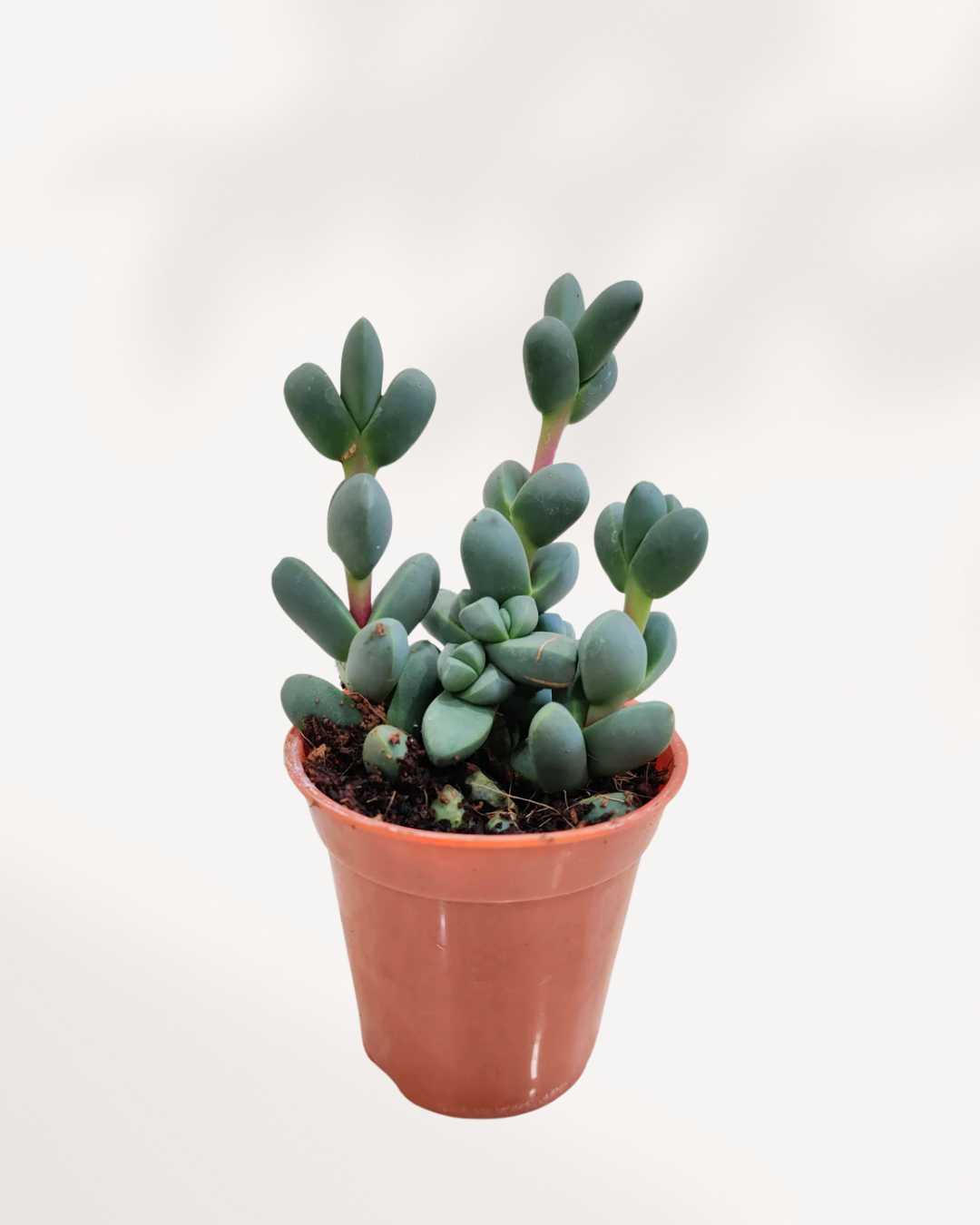
About This Plant
Other Plants You Might Like
Living Stone Lithops. Desert geometry, different form.
Aloe Pheasant Breast. Full sun and sculptural.
String of Pearls. Trailing and low-water.
Common Questions
How often should I water the Delosperma Lehmannii?
In spring and summer, water when the soil is completely dry, roughly every two to three weeks. In Canadian winter dormancy from October to February, once every four to six weeks with a small amount. This plant is killed far more often by overwatering than by drought. Our indoor plant watering guide shows how to check soil moisture correctly.
Why is my Ice Plant not flowering?
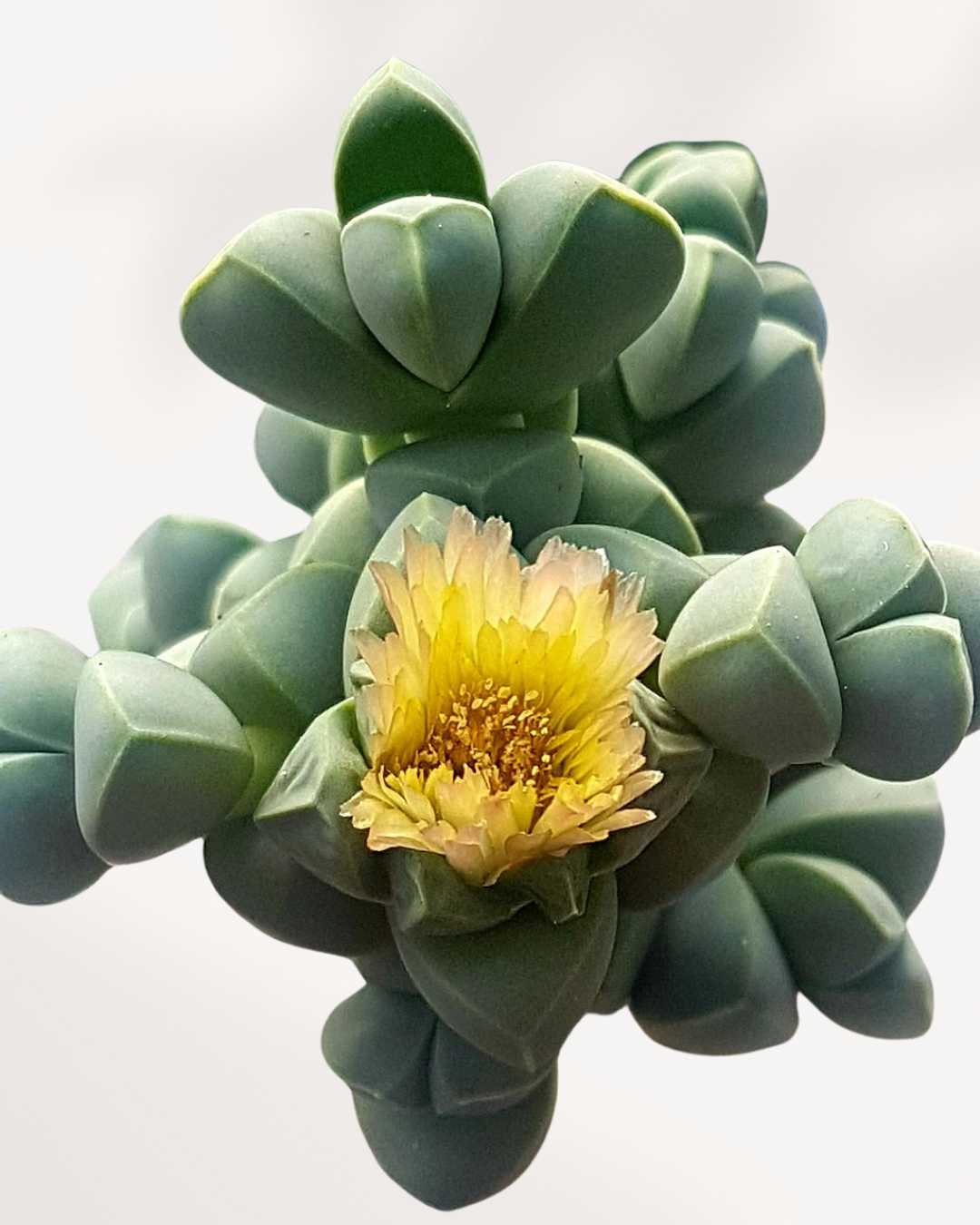
Insufficient direct light is almost always the cause. Delosperma lehmannii flowers only in strong direct sun. If it is on an east-facing or north-facing windowsill, move it to a south-facing window. Also ensure it is getting the brief cooler, drier period of winter dormancy rather than being kept uniformly warm and watered year-round. The contrast between seasons triggers spring flowering. Read our guide to light requirements for indoor plants for more.
Is the Delosperma Lehmannii safe for pets?
It is not listed in the ASPCA confirmed toxic or non-toxic database. Multiple sources describe it as generally non-toxic. As a precaution, keep it out of reach of pets and small children until confirmed either way.
Why are the rosettes becoming loose or leggy?
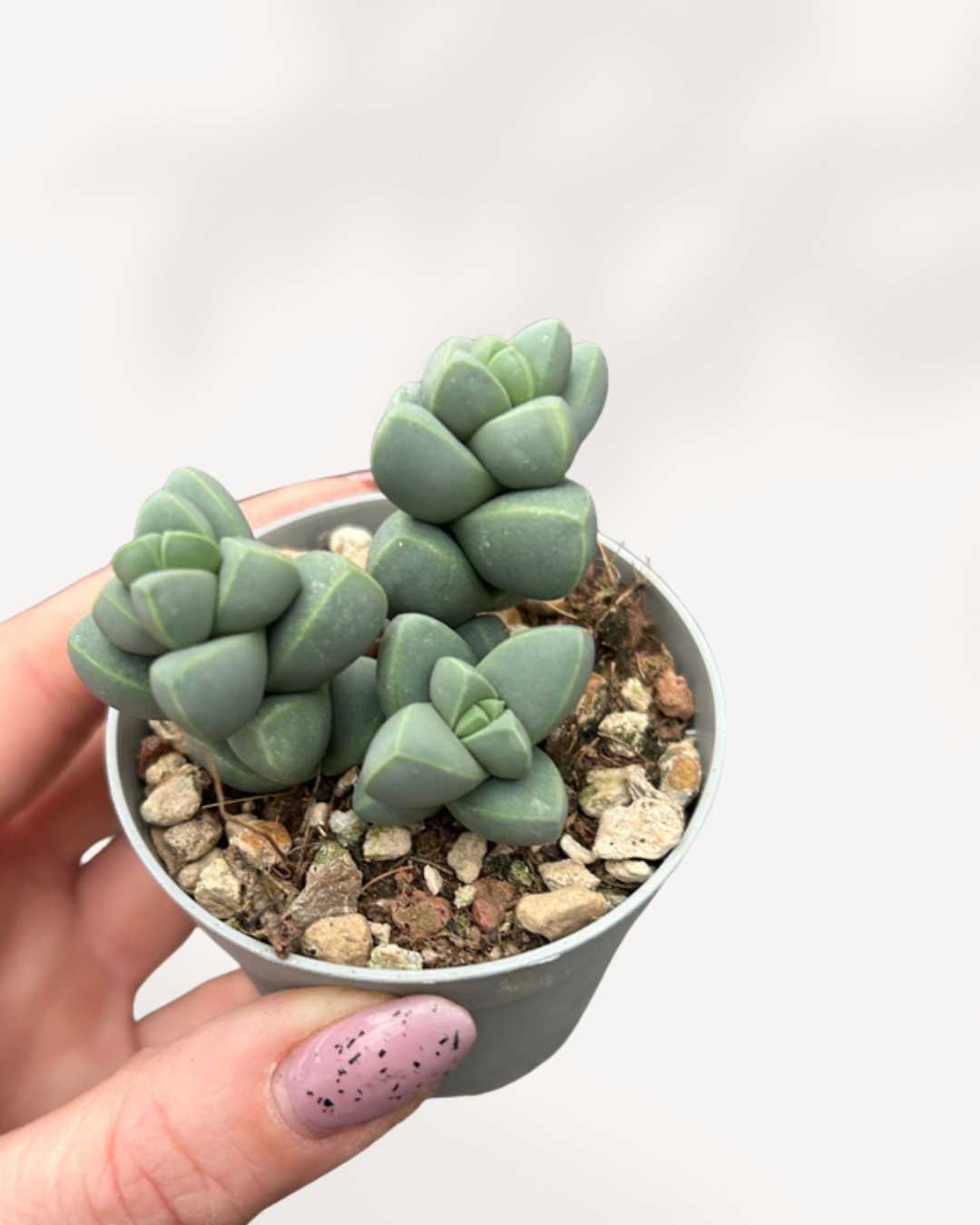
Loose, elongated rosettes that lose their tight triangular geometry are caused by insufficient direct light. The plant is stretching toward more light. Move it to a south-facing windowsill with at least four to six hours of direct sun daily. Compact tight rosettes are only achieved in full direct sun.
Will it survive a Canadian winter indoors?
Yes, very easily. It goes into true dormancy and needs almost no water. Keep it in your sunniest south-facing window, above 10 degrees C, and water only once every four to six weeks. The dry air in Canadian homes during the heating season suits it perfectly. Read our tips on keeping plants alive in winter for more.
How to Take care of Delosperma Lehmannii
Good to Know
Sun: Full direct sun
Sun: Full direct sun
Light: Bright direct
Light: Bright direct
Water: When completely dry, barely in winter
Water: When completely dry, barely in winter
Humidity: Low
Humidity: Low
Pet Friendly: Caution
Pet Friendly: Caution
Pro Tip
Pro Tip
What To Expect
Shipping and Delivery Details
Shipping and Delivery Details
Choose local GTA delivery, free Richmond Hill pickup, or shipping across Canada. Pick your delivery or pickup date at checkout, we'll have it ready and fresh for you. See full shipping and delivery details.
30-Day Happy Plant Guarantee
30-Day Happy Plant Guarantee
If your plant arrives damaged or isn't healthy, contact us within 30 days with a photo. We'll send a replacement or a full refund, and we cover return shipping.
View our complete guarantee policy
Frequently Asked Questions
Frequently Asked Questions
Certainly! If you're pondering about ordering plants online, you're not alone. We've compiled the most frequently asked questions. Check out our FAQ section here for quick answers! Happy planting!
Plant and Pot Size Guide
Plant and Pot Size Guide
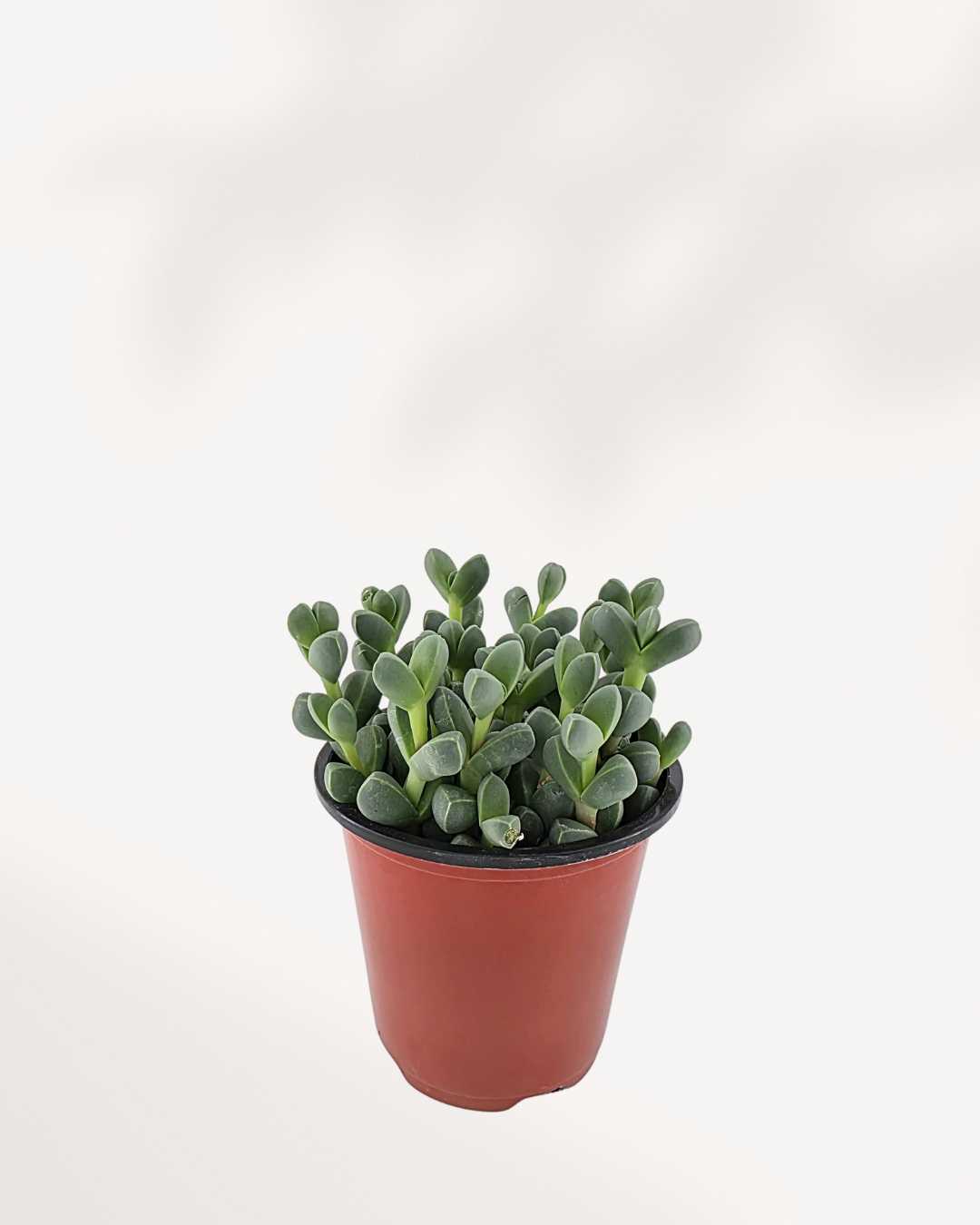
4" Pot (Small): plant is approx. 6-10 inches tall. 6" Pot (Medium): approx. 12-18 inches tall. All plants come in a standard nursery pot. Decorative pots are sold separately.
Winter Shipping Protection
Winter Shipping Protection
Between November and March, you can add Winter Shipping Protection at checkout. It adds insulated packaging and heat packs to protect your plant from the cold in transit. Cold damage is only covered if it's added to your order.
You can add winter shipping protection at checkout.
Returns Policy
Returns Policy
If your plant arrives damaged, has pests, or starts to decline within 30 days, we'll send a replacement or a full refund, and we cover return shipping.
Change of mind, repotted or trimmed plants, and cold damage without Winter Shipping Protection aren't covered. See our full Return Policy
Plant care essentials
Everything you need to keep this plant thriving.


Hear From Happy Plant Parents.
Who have brought Mygreenscape plants into their homes.


